



What's Happening?
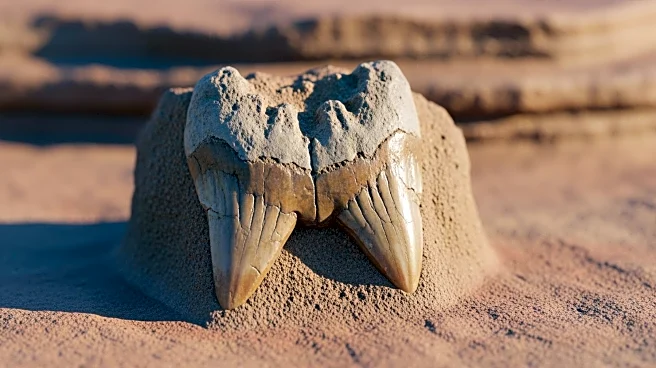
New fossils of Purgatorius, the earliest-known relative of all primates, have been discovered in the Denver Basin, Colorado. This marks the southernmost finding of these fossils in North America, providing new insights into the early spread of primates after
the extinction of dinosaurs. The fossils suggest that archaic primates originated in the north and diversified as they moved southward. The study, led by Dr. Stephen Chester from Brooklyn College and the City University of New York, highlights the significance of these findings in understanding the geography and evolution of early primates.
Why It's Important?
The discovery of Purgatorius fossils in Colorado fills a critical gap in the understanding of primate evolution and biogeography. It suggests that early primates were more widespread than previously thought, which could reshape theories about their adaptation and survival strategies post-dinosaur extinction. This finding is significant for paleontologists and evolutionary biologists as it provides a clearer picture of how primates, including human ancestors, might have evolved and spread across the continent.
What's Next?
Further research and excavation in the Denver Basin and other southern regions could uncover more fossils, potentially leading to the discovery of new species of early primates. This could provide additional insights into the evolutionary history and migration patterns of primates. The study also emphasizes the importance of using advanced techniques like screen-washing to uncover small fossils that might have been missed using traditional methods.