

What's Happening?
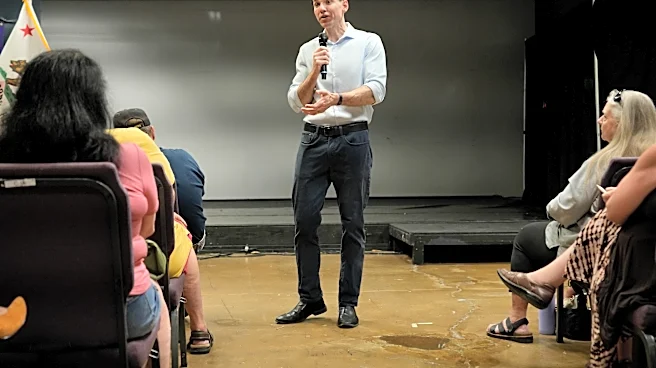
New York Representative Mike Lawler has received formal endorsements from 11 law enforcement unions and police organizations. These endorsements come as Lawler faces a challenging re-election campaign for his House seat in the Hudson Valley. The groups
supporting Lawler include the Police Conference of New York, Rockland County PBA, Port Authority PBA, and New York State Fraternal Order of Police, among others. Mike O'Mara, President of the Police Conference of New York, expressed the group's support, citing Lawler's commitment to prioritizing families over felons and his consistent backing of law enforcement. Sean O'Connor, President of the Rockland County PBA, stated that their decision was based on Lawler's individual record in Congress and as a state Assemblyman, rather than party affiliation. Lawler, a Republican two-term congressman, is in a tight race against Democrat Cait Conley, a former intelligence official in President Joe Biden's administration, a U.S. Army combat veteran, and a West Point graduate. Recent polling indicates that Lawler and Conley are statistically tied ahead of the November election, with The Cook Political Report rating New York's 17th Congressional District as a toss-up.
Why It's Important?
These endorsements from a significant number of law enforcement unions are crucial for Representative Lawler, providing him with key credibility and support in a highly competitive congressional district. In an election where public safety and law enforcement issues often resonate with voters, securing the backing of police organizations can significantly influence voter perception and turnout. For Lawler, these endorsements reinforce his image as a strong advocate for public safety, potentially swaying undecided voters who prioritize these concerns. For the law enforcement unions, their collective endorsement signals a clear preference for a candidate they believe will champion their interests and support their work. This move also highlights the increasing politicization of law enforcement support, where unions actively engage in electoral politics to back candidates aligned with their agendas. The tight nature of the race in New York's 17th Congressional District, identified as the only toss-up in the state by The Cook Political Report, means that every endorsement and every perceived advantage could be decisive in the upcoming November election. The outcome of this race could impact the balance of power in the U.S. House of Representatives.
What's Next?
As the November election approaches, Representative Lawler will likely leverage these law enforcement endorsements in his campaign messaging, emphasizing his commitment to public safety and his support for police. This strategy aims to solidify his base and attract voters who prioritize law and order. His opponent, Cait Conley, will need to counter this narrative, potentially by highlighting different aspects of public safety or by questioning the broader implications of such endorsements. The campaign will intensify, with both candidates likely increasing their public appearances, advertising, and outreach efforts in the Hudson Valley. The Cook Political Report's designation of the district as a toss-up suggests that external political action committees and national party organizations will also likely invest significant resources in this race, further escalating its profile and competitiveness. The outcome will be closely watched as an indicator of broader political trends and the effectiveness of law enforcement endorsements in swing districts.
Beyond the Headlines
The collective endorsement of 11 law enforcement unions for Representative Lawler underscores a broader trend of police organizations becoming more vocal and politically active in U.S. elections. This phenomenon reflects a growing alignment between certain political factions and law enforcement, particularly in the context of debates surrounding crime rates, police reform, and public safety funding. Such endorsements can have a dual effect: while they provide a significant boost to endorsed candidates, they can also draw criticism from groups advocating for police accountability or alternative approaches to public safety. The emphasis on 'backing the blue' by candidates like Lawler highlights a cultural and political divide in how communities view law enforcement's role and challenges. This dynamic can influence not only election outcomes but also future policy decisions regarding criminal justice, resource allocation for police departments, and the balance between public safety and civil liberties. The tight race in New York's 17th Congressional District serves as a microcosm of these national tensions and the evolving relationship between political candidates, law enforcement, and the electorate.