





What's Happening?
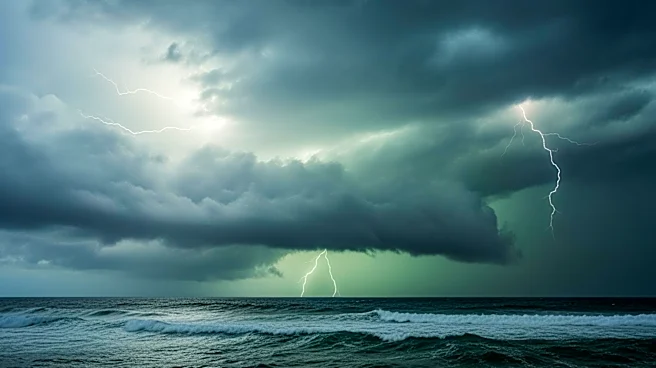
Typhoon Jangmi, also known as Typhoon No 6, has moved northwards across Japan, causing significant disruptions. The storm has resulted in 23 injuries, with 17 occurring in Okinawa. It has damaged 57 homes and left 60,000 households without electricity.
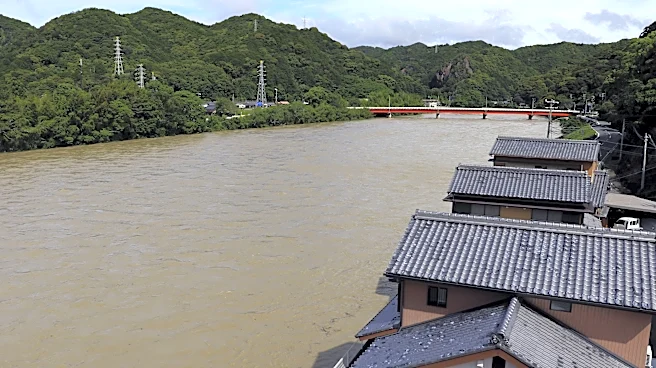
Authorities issued evacuation advisories to 1.52 million people due to the risk of landslides and river flooding. The typhoon also caused damage to the exterior wall of Himeji Castle, a UNESCO World Heritage site. The Japan Meteorological Agency recorded sustained wind speeds of 80 mph, classifying it as a category 1 typhoon. The storm has now weakened into a tropical depression and is moving eastwards.
Why It's Important?
The impact of Typhoon Jangmi highlights the vulnerability of infrastructure and communities in Japan to severe weather events. The evacuation of over a million people underscores the potential for significant human and economic costs. Damage to cultural heritage sites like Himeji Castle also raises concerns about the preservation of historical landmarks. The storm's effects on electricity supply and transportation further illustrate the challenges in maintaining essential services during natural disasters. This event may prompt discussions on improving disaster preparedness and infrastructure resilience in Japan.
What's Next?
As Typhoon Jangmi moves away from Japan, recovery efforts will likely focus on restoring power and repairing damaged infrastructure. Authorities may also review and update evacuation protocols and disaster response strategies. The event could lead to increased investment in weather forecasting and early warning systems to better prepare for future storms. Additionally, there may be a push for more robust building codes and infrastructure improvements to withstand severe weather conditions.