


What's Happening?
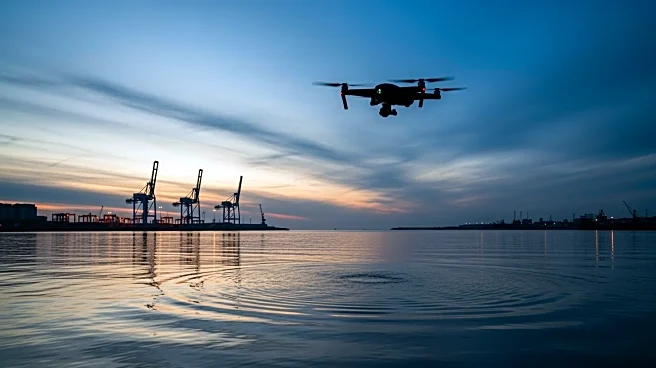
Ukrainian drones targeted the Russian port of Taman, causing significant damage to fuel storage tanks, warehouses, and port terminals. This attack, which occurred just two days before scheduled U.S.-brokered peace talks between Russia and Ukraine in Geneva,
resulted in fires and injuries to two individuals. The Krasnodar region's Governor, Veniamin Kondratyev, confirmed the incident, highlighting the ongoing conflict's impact on critical infrastructure. This marks the fourth drone strike on Taman in recent months, with previous attacks damaging oil loading piers and petroleum tanks. The port is a crucial hub for oil products, moving approximately four million tonnes last year, and supports Russian military operations.
Why It's Important?
The drone strike underscores the persistent volatility in the region, complicating diplomatic efforts aimed at resolving the conflict. The timing of the attack, just before peace negotiations, could influence the talks' dynamics, potentially hardening positions on both sides. The port of Taman's role in supplying fuel for Russian military operations makes it a strategic target, and its repeated targeting highlights the ongoing struggle over control of critical infrastructure. The broader implications include potential disruptions to global oil markets and increased geopolitical tensions, affecting international relations and economic stability.
What's Next?
As Russian and Ukrainian negotiators prepare to meet in Geneva, the recent escalation may impact the peace talks' outcomes. Stakeholders will likely focus on establishing a ceasefire or moratorium on attacks, particularly on energy infrastructure. The international community, including the U.S., may increase diplomatic pressure to achieve a resolution. However, the history of failed agreements suggests that achieving lasting peace will be challenging. Observers will watch for any shifts in military strategies or further retaliatory actions that could derail diplomatic efforts.
Beyond the Headlines
The repeated targeting of ports like Taman and Ukraine's Black Sea infrastructure highlights the conflict's economic dimensions, particularly regarding energy and food exports. The attacks on civilian infrastructure raise ethical concerns about the conduct of warfare and the protection of non-combatant resources. Long-term, the conflict could lead to shifts in global energy supply chains and increased investment in alternative routes and sources to mitigate risks associated with regional instability.