





What's Happening?
The University of Hawaiʻi Economic Research Organization (UHERO) is set to release a new report on November 9, evaluating Honolulu’s “Bill 7” affordable rental housing program. Since its adoption in 2019, the program has produced 224 completed units,
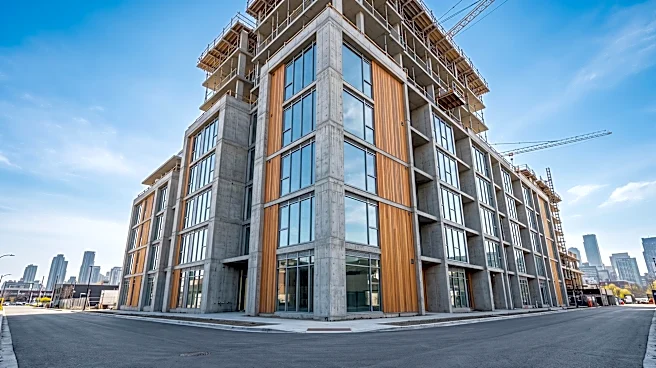
significantly falling short of its annual goal of 500 units. UHERO's study, utilizing its new Housing Policy Simulator, indicates that Bill 7 has improved development feasibility compared to standard zoning regulations. However, the report identifies rising construction costs, higher interest rates, and persistent permitting delays as key factors hindering housing production. The report will also highlight potential strategies to enhance the program's effectiveness.
Why It's Important?
This UHERO report is crucial for understanding the challenges and potential solutions within Honolulu's affordable housing crisis. The underperformance of Bill 7, a program designed to address critical housing needs, impacts a broad spectrum of residents, particularly those seeking affordable rental options. The identified constraints—rising construction costs, higher interest rates, and permitting delays—are not unique to Honolulu and reflect broader economic and bureaucratic hurdles in housing development across the U.S. The report's recommendations, such as increased development density, faster permitting processes, and more effective financial incentives, could serve as a blueprint for other municipalities grappling with similar issues, potentially influencing future housing policies and investment strategies.
What's Next?
UHERO researchers will hold a virtual press conference on November 9 at 10 a.m. HST to discuss the report's findings and answer questions. This event will likely bring increased public and political attention to the performance of Bill 7 and the broader issue of affordable housing in Honolulu. The report's recommendations could prompt Honolulu city officials to re-evaluate and potentially revise the Bill 7 program, focusing on implementing the suggested improvements. Stakeholders, including housing developers, community advocates, and financial institutions, will be closely watching for policy changes that could impact future affordable housing projects and investment opportunities in the region.
Beyond the Headlines
The UHERO report on Bill 7 extends beyond a simple program evaluation, touching upon the complex interplay of economic forces, regulatory frameworks, and social needs in urban development. The persistent struggle to meet affordable housing goals, despite dedicated legislative efforts, underscores systemic issues such as the escalating cost of materials and labor, the impact of monetary policy on interest rates, and the often-cumbersome nature of local permitting processes. This situation highlights a critical ethical dimension: the balance between market forces and the public good of ensuring accessible housing. The report's findings could catalyze a deeper conversation about innovative financing models, streamlined bureaucratic procedures, and sustainable urban planning strategies to address housing affordability not just in Honolulu, but in other high-cost U.S. cities.