







What's Happening?
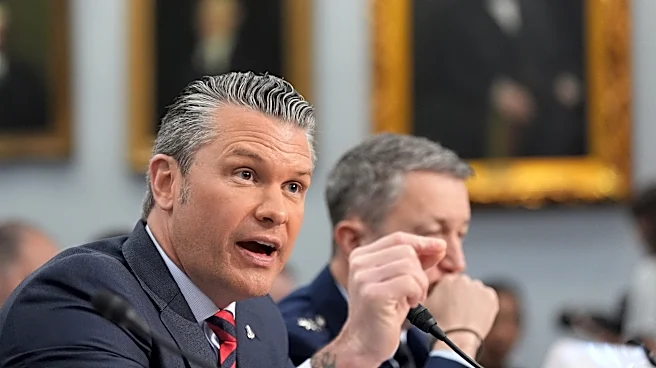
Defense Secretary Pete Hegseth appeared before Congress to address concerns from both Republican and Democratic lawmakers regarding the ongoing Iran war. The discussions focused on the Trump administration's strategy, the financial burden of the conflict,
and the impact on U.S. weapons stockpiles. Hegseth assured Congress that the military has sufficient missile defense systems and munitions, despite concerns about depletion. The cost of the war has escalated to approximately $29 billion, primarily due to munitions replacement and operational expenses. Lawmakers expressed frustration over the lack of a clear strategy and the war's indefinite nature. The hearings are part of a broader review of the Trump administration's 2027 military budget proposal, which includes a historic $1.5 trillion allocation.
Why It's Important?
The scrutiny over the Iran war highlights significant concerns about U.S. military readiness and fiscal responsibility. The conflict's rising costs and its impact on weapons stockpiles could affect future military engagements and national security. The lack of a clear strategy raises questions about the administration's foreign policy objectives and its ability to manage international conflicts effectively. The hearings also underscore the political implications of the war, as higher fuel prices linked to the conflict pose challenges for Republicans in upcoming elections. The situation emphasizes the need for transparent and strategic military planning to ensure U.S. interests are protected without overextending resources.
What's Next?
Congressional hearings will continue, providing lawmakers with opportunities to question military leaders about the Iran war's execution and future plans. The Trump administration faces pressure to define a clear endgame and address economic impacts, such as surging fuel prices. Discussions may lead to legislative actions aimed at curbing the conflict or reallocating military resources. The administration's response to these challenges will be closely monitored by both domestic and international stakeholders, influencing future U.S. foreign policy and military strategy.