
What's Happening?
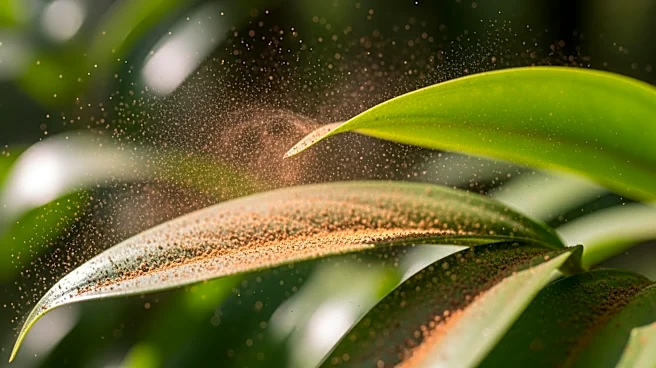
Every year, approximately 27.7 million tons of dust from the Sahara Desert is transported across the Atlantic Ocean and deposited in the Amazon rainforest. This dust contains about 22,000 tons of phosphorus,
a critical nutrient that the Amazon loses to runoff due to its frequent heavy rainfall. The Amazon's soils are naturally low in phosphorus, which is essential for plant growth and photosynthesis. The dust primarily originates from the El Djouf region, spanning Mauritania, Mali, and northern Algeria. This intercontinental nutrient transfer is crucial for maintaining the Amazon's productivity, as the rainforest's nutrient balance is not sustained by its own water cycle but rather by this long-distance dust transport.
Why It's Important?
The nutrient transfer from the Sahara to the Amazon highlights a significant ecological interdependence between two distant regions. The Amazon rainforest, often perceived as a self-sustaining ecosystem, relies on external phosphorus inputs to maintain its productivity. This connection underscores the complexity of global ecological systems and the importance of understanding these interactions for conservation efforts. The ongoing research into the sources and mechanisms of this dust transport is vital for predicting how changes in climate and atmospheric conditions might affect the Amazon's nutrient balance and, consequently, its role in global carbon cycling and biodiversity.
What's Next?
Future research will likely focus on refining the understanding of the specific sources of Saharan dust and the mechanisms of its transport to the Amazon. Scientists are also interested in how climate change might alter these patterns, potentially affecting the nutrient supply to the rainforest. Continued satellite monitoring and atmospheric modeling will be essential in predicting these changes and informing conservation strategies. Additionally, understanding the long-term sustainability of this nutrient transfer is crucial, as shifts in regional climates or dust sources could impact the Amazon's ecological health.
Beyond the Headlines
This phenomenon challenges the traditional view of the Amazon as an isolated ecosystem, revealing its dependence on external factors for nutrient replenishment. It also raises questions about the resilience of the Amazon in the face of environmental changes. The finite nature of the phosphorus sources in the Sahara and potential shifts in dust transport patterns due to climate change could have profound implications for the Amazon's future. This intercontinental connection exemplifies the intricate and often overlooked dependencies within Earth's ecosystems, highlighting the need for a holistic approach to environmental conservation.