

What's Happening?
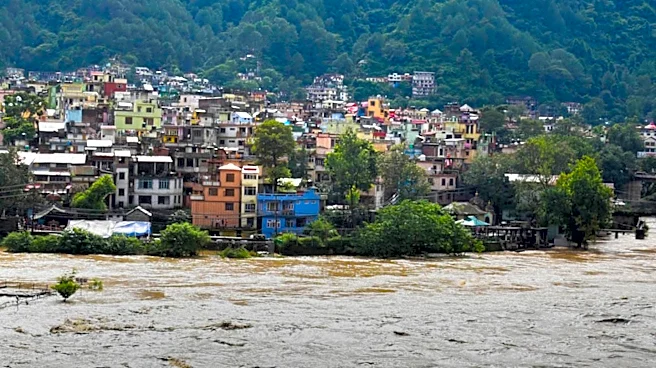
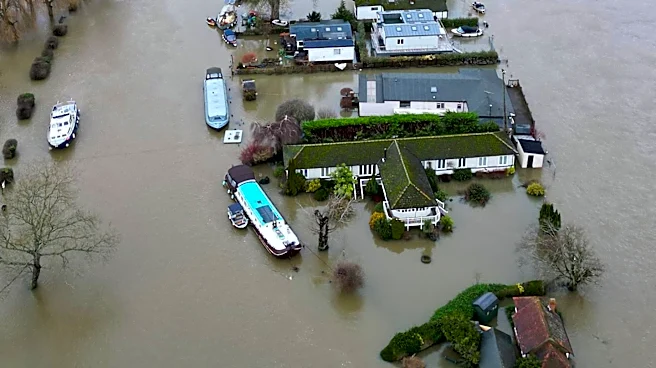
39 farmers from Pakistan's southern Sindh province are suing German energy firm RWE and cement maker Heidelberg Materials in a German court. The lawsuit alleges that the companies' climate-warming emissions contributed to the 'apocalyptic' flooding in 2022,
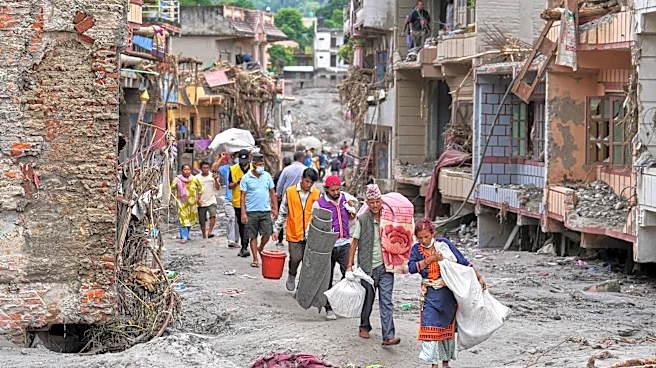
which devastated their crops, livestock, and homes. The farmers, including Abdul Hafeez Khoso, claim that the floods, which affected a third of Pakistan, killed 1,700 people, and impacted 30 million, were intensified by climate change caused by these industrial emissions. The companies are being targeted not for direct operations in Pakistan, but for their overall contribution to global emissions. This legal action is supported by Pakistani and European organizations, aiming to secure compensation and advance climate justice efforts. Both RWE and Heidelberg Materials deny wrongdoing, stating their operations comply with German laws and that such claims are unfounded.
Why It's Important?
This lawsuit represents a significant development in the global climate litigation landscape, particularly in holding corporations accountable for climate change impacts. While climate lawsuits have largely targeted governments, this case, building on a previous German ruling that left the door open for holding emitters liable, seeks to establish a precedent for corporate responsibility. A successful outcome could lead to companies being required to pay compensation proportionate to their greenhouse gas emissions, potentially reshaping corporate environmental policies and financial liabilities worldwide. For the U.S., this could influence similar legal challenges against American corporations, prompting a reevaluation of their climate strategies and investments in emission reduction technologies to mitigate future legal and financial risks. It also highlights the growing pressure on developed nations and their industries to address the disproportionate impact of climate change on vulnerable countries.
What's Next?
The civil process for this lawsuit is expected to take several years. The plaintiffs, including Munawar Khatoon, view this case as a fight for justice, holding these companies responsible for their destruction. The outcome will be closely watched by legal experts, environmental activists, and corporations globally, as it could set a new standard for climate liability. If successful, it could encourage more climate-vulnerable communities to pursue similar legal avenues against major polluters. Conversely, if the case fails, it might underscore the challenges in proving direct causation between specific corporate emissions and localized climate disasters. Regardless of the verdict, the lawsuit is likely to intensify discussions around corporate accountability for climate change and the need for international frameworks to address climate-induced losses and damages.
Beyond the Headlines
This case delves into the complex ethical and legal dimensions of climate change, particularly the concept of 'climate justice.' It raises fundamental questions about who bears the financial burden of climate change impacts, especially when the most affected communities contribute the least to global emissions. The lawsuit argues that large companies were aware of climate change impacts since the 1960s but failed to adequately reduce emissions, suggesting a 'wrongful behavior.' This challenges the traditional legal framework that often struggles to attribute responsibility for diffuse environmental harms. The mental and financial toll on the affected farmers, as described by Abdul Khalique Laghari, underscores the human cost of climate inaction and the urgent need for effective global solutions. The case could also influence the development of international climate policy, pushing for stronger regulations and mechanisms for loss and damage compensation.