







What's Happening?
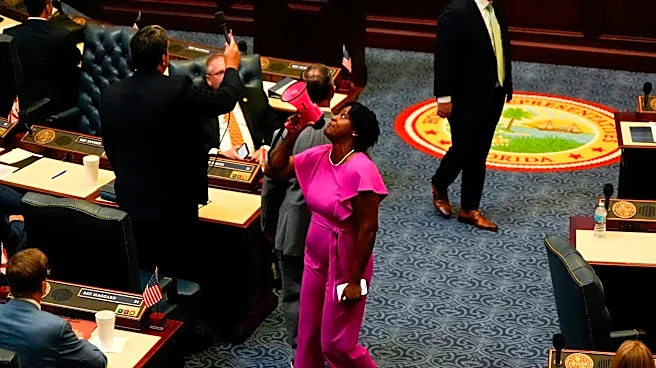
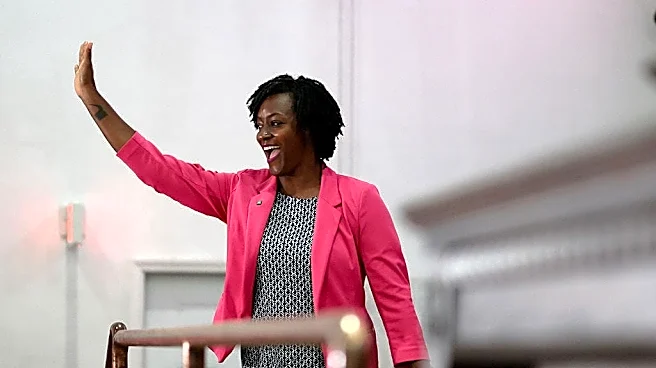
Angie Nixon, a Democratic Socialist, has won a major party nomination for Senate in Florida, marking a significant victory for progressive politics in the state. Nixon's campaign platform centered on universal healthcare and a $25 an hour minimum wage.
Her win is particularly notable as she is the first Black woman to secure a major party nomination for Senate in Florida. This outcome contrasts with other Florida primaries where establishment Democrats, Jared Moskowitz and Debbie Wasserman Schultz, successfully fended off progressive challengers who also advocated for universal healthcare. Nixon's victory is being highlighted by progressives and Democratic Socialists of America (DSA) activists as an example of grassroots strength. She will now face Republican Sen. Ashley Moody in the general election, a race that forecasters currently rate as solidly Republican.
Why It's Important?
Nixon's nomination underscores the growing influence of progressive and democratic socialist ideologies within the Democratic Party, particularly concerning issues like universal healthcare and minimum wage. Her success in a state often seen as politically moderate or conservative could signal a shift in voter priorities or the effectiveness of grassroots organizing. The emphasis on universal healthcare in her campaign, as well as in the campaigns of the progressive challengers who lost to Moskowitz and Wasserman Schultz, indicates that this issue remains a potent rallying cry for a segment of the Democratic base. This election also highlights the internal struggle within the Democratic Party between its progressive and establishment wings, with mixed results in Florida's primaries reflecting this ongoing dynamic. The outcome of Nixon's general election race will be a key indicator of the broader appeal of her platform in a competitive state.
What's Next?
Angie Nixon will proceed to the general election to challenge Republican Sen. Ashley Moody. Her campaign is expected to continue to champion universal healthcare and a $25 minimum wage, aiming to mobilize progressive voters and potentially attract independents. The race will likely be closely watched as a barometer of progressive strength in a swing state. Meanwhile, the Democratic Party will continue to navigate the ideological divide between its progressive and establishment factions, with future primaries potentially seeing similar contests. The success or failure of candidates like Nixon could influence future campaign strategies and policy priorities for Democrats nationwide. Her ongoing legal situation regarding a sit-in at Governor DeSantis' office, set for trial in September, could also impact her campaign.
Beyond the Headlines
Nixon's win, particularly as the first Black woman to achieve a major party Senate nomination in Florida, carries significant symbolic weight for representation and diversity in politics. Her platform, which includes universal healthcare and a substantial minimum wage increase, reflects a broader national conversation about economic inequality and access to essential services. The mixed results for democratic socialist candidates in Florida's primaries suggest that while these ideas are gaining traction, their widespread acceptance is not guaranteed, and establishment Democrats still hold considerable power. The focus on universal healthcare in these campaigns also points to a potential long-term shift in how healthcare is discussed and prioritized in U.S. politics, moving beyond incremental reforms towards more systemic changes.