


What's Happening?
New Mexico, alongside 24 other states, has filed a lawsuit against the United States Postal Service (USPS) concerning new regulations on mail-in voting. The USPS recently implemented a rule granting it authority to regulate voting by mail, a move that
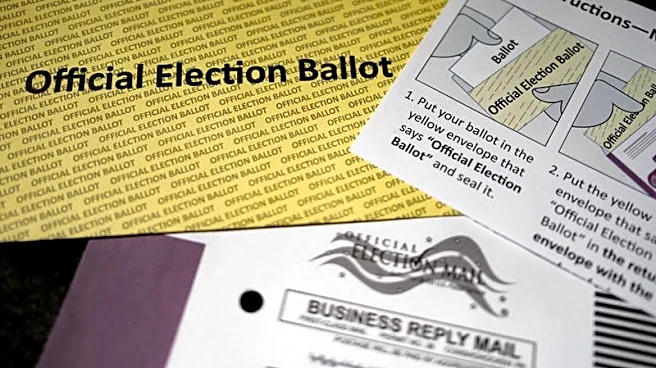
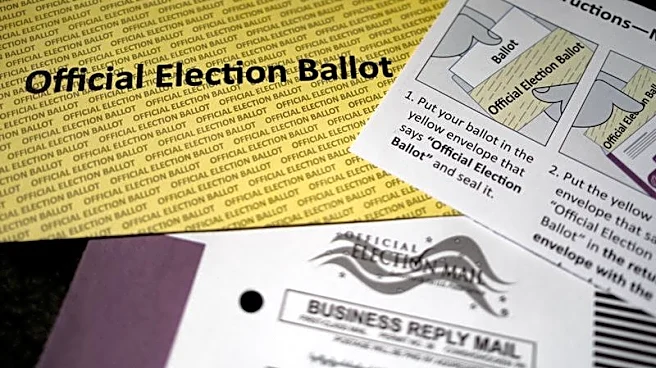
follows an executive order issued by President Trump in March. This executive order aimed to create a national list of eligible voters to whom the USPS could mail ballots. Consequently, the new USPS rule mandates states to establish registered voter lists, and the postal service will only deliver ballots to voters included on these approved lists. New Mexico Attorney General Raúl Torrez stated that this new rule imposes significant burdens just three weeks before ballots are due to be sent to New Mexicans serving overseas in the military. One specific concern highlighted is the requirement for states to redesign mail-in ballot envelopes to meet new USPS specifications, which must then be approved by the postal service. In the 2024 general election, 111,403 New Mexicans cast their ballots by mail.
Why It's Important?
This lawsuit carries significant implications for the integrity and accessibility of the U.S. electoral process, particularly regarding mail-in voting. The new USPS regulations, if enforced, could lead to increased administrative complexities and costs for states, as they would be required to redesign ballot envelopes and manage updated voter lists under federal oversight. This could disproportionately affect states with established mail-in voting systems and potentially disenfranchise eligible voters due to administrative errors or flaws arising from rushed procedural changes. The timing of the rule's implementation, just weeks before ballots are to be dispatched to overseas military personnel, raises concerns about the ability of states to comply without disrupting the voting process for a critical demographic. The legal challenge underscores a broader tension between federal and state control over election administration, with potential impacts on voter turnout and confidence in the electoral system. The outcome of this lawsuit could set a precedent for how mail-in voting is regulated nationwide, affecting millions of voters.
What's Next?
The immediate future of the new USPS rule remains uncertain as it is currently being challenged in court. It is unclear whether the rule will be enforced for the upcoming election. The lawsuit will proceed through the judicial system, where courts will evaluate the legality and potential impact of the USPS regulations. States involved in the lawsuit will likely continue to advocate for their autonomy in managing elections and protecting voter access. Depending on court rulings, the USPS may be compelled to modify or withdraw the new rule, or states may be forced to comply with the new requirements, potentially incurring significant costs and logistical challenges. The situation could also prompt legislative action at either the federal or state level to clarify or redefine the parameters of mail-in voting regulations. The ongoing legal battle highlights the contentious nature of election administration and the continuous efforts to balance security with accessibility.
Beyond the Headlines
Beyond the immediate legal and logistical challenges, this dispute touches upon fundamental questions of voting rights and federalism in the United States. The attempt to centralize control over voter lists and mail-in ballot specifications through a federal agency like the USPS raises concerns about potential partisan motivations and the erosion of states' traditional roles in election management. Critics argue that such measures could be used to suppress votes, particularly in rural areas or among specific demographics, by creating unnecessary barriers to ballot access. The debate also highlights the evolving landscape of election security and the ongoing efforts to balance concerns about fraud with the imperative to ensure broad participation. The outcome of this case could influence future discussions on national election standards, potentially leading to more standardized federal oversight or, conversely, reinforcing states' rights in election administration. This legal challenge is a microcosm of the larger national conversation about the future of democratic processes in the U.S.