







What's Happening?
The UK government has announced new measures aimed at reducing the dependency of electricity prices on gas prices, a system known as 'marginal pricing.' This decision comes in response to the ongoing energy crisis exacerbated by the Iran War, which has driven
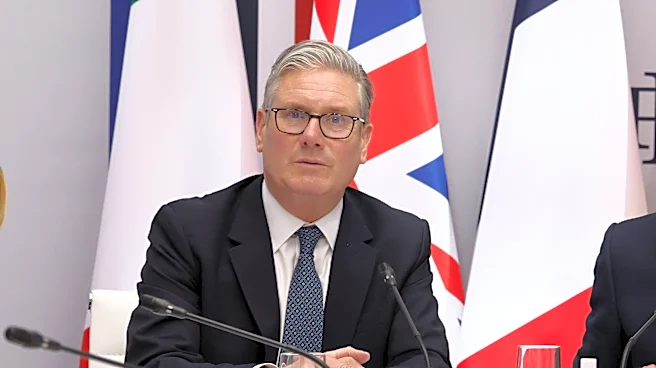
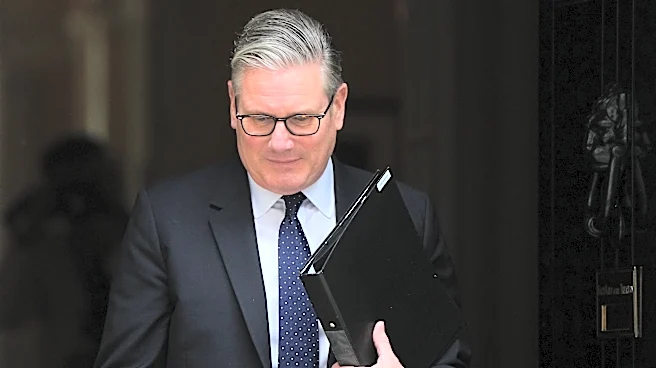
global energy prices higher. Prime Minister Keir Starmer emphasized the need to stabilize energy bills and reduce the financial burden on households. The measures include offering voluntary, long-term fixed contracts to low-carbon electricity generators, which currently supply about one-third of Britain's power. These contracts are designed to provide a fixed price for electricity, ensuring stability for both consumers and producers. Additionally, the government plans to increase the Electricity Generator Levy from 45% to 55% for those who do not participate in these contracts. This levy applies to nuclear, legacy renewables, and gas generators.
Why It's Important?
The initiative to decouple gas and electricity prices is significant as it aims to protect consumers from volatile global gas prices, which have been a major factor in rising energy costs. By stabilizing electricity prices, the UK government seeks to ease the financial pressure on households and promote a more sustainable energy system. The move is also seen as a step towards achieving the country's net-zero goals by encouraging the use of low-carbon energy sources. Environmental groups and industry leaders have welcomed the changes, although some argue that more comprehensive reforms are needed to fully address the issue. The policy is expected to enhance energy security, support economic growth, and contribute to climate change mitigation efforts.
What's Next?
The UK government will conduct consultations on the design of the fixed contract scheme to ensure it provides value for money to consumers. The increased levy on non-participating generators is likely to incentivize more companies to join the scheme. Stakeholders, including environmental NGOs and consumer rights groups, are expected to continue advocating for a complete de-linking of gas and electricity prices. The government may face pressure to implement further reforms to achieve a more resilient and sustainable energy market. The success of these measures will be closely monitored, as they could serve as a model for other countries facing similar energy challenges.
Beyond the Headlines
The decision to decouple gas and electricity prices reflects a broader shift towards a more sustainable and resilient energy system. It highlights the importance of transitioning to low-carbon energy sources to mitigate the impacts of global energy market fluctuations. The policy also underscores the need for governments to balance economic, environmental, and social considerations in energy planning. As the UK moves towards its net-zero targets, the success of these measures could influence future energy policies and investments, both domestically and internationally.