






What's Happening?
The October jobs report from the Bureau of Labor Statistics reveals a significant increase in total nonfarm payroll employment, rising by 165,000. This figure is substantially higher than the average monthly gain of 48,000 over the preceding 12 months.
The unemployment rate stood at 4.1 percent. Key sectors driving this growth include professional and business services, which added 70,000 jobs—well above its 12-month average of 15,000. Within this sector, professional, scientific, and technical services contributed 33,000 jobs. Healthcare also showed strong performance, adding 42,000 jobs, exceeding its 12-month average of 31,000, with hospitals, home healthcare services, and outpatient care centers being major contributors. Despite these gains, the report also noted an increase of 339,000 in the number of people working part-time for economic reasons, reaching 4.8 million, suggesting the labor market is not uniformly tight.
Why It's Important?
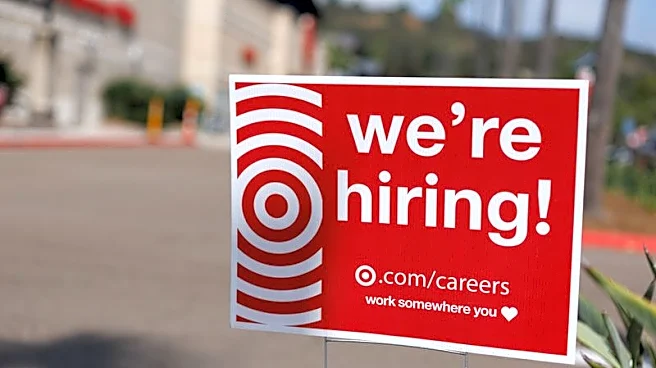
This October jobs report signals a potential shift in the labor market, indicating that the period of a 'slow labor market' where candidates were plentiful and hiring was less competitive may be drawing to a close. For businesses, particularly startups and those in healthcare and professional services, this means that the ease of hiring experienced over the past year might be diminishing. Increased competition for talent in these sectors could lead to longer hiring processes and potentially higher recruitment costs. The rise in part-time employment for economic reasons, however, suggests underlying vulnerabilities in the labor market, indicating that while overall job numbers are up, job quality or full-time opportunities may still be a concern for a significant portion of the workforce. This mixed signal requires careful interpretation by employers and policymakers alike.
What's Next?
Employers, especially founders and those in high-growth sectors, should re-evaluate their hiring strategies. It is advisable to prioritize critical roles, shorten interview processes to avoid losing candidates to competitors, and engage with current employees to understand retention factors. While one month's data does not establish a definitive trend, the report serves as a prompt to adjust hiring plans. The upcoming November jobs report, due in December, will provide further clarity on whether this upward trend in hiring momentum is sustained. The market's shift could lead to increased competition for skilled workers, potentially driving up wages in certain sectors and impacting overall business operational costs.
Beyond the Headlines
The report highlights a nuanced labor market where strong sectoral growth coexists with an increase in involuntary part-time work. This dichotomy suggests that while demand for specific skills is robust, broader economic conditions may still be pushing some individuals into less secure employment. The 'quiet hiring window' closing could also reflect a broader economic recovery gaining traction, leading to more aggressive talent acquisition across industries. This could intensify the war for talent, particularly for specialized roles, and necessitate innovative recruitment and retention strategies. The report's findings underscore the dynamic nature of the U.S. labor market, influenced by both macro-economic factors and specific industry demands.