




What's Happening?
University of Wyoming (UW) faculty members have recently been featured in state media for their expertise on critical issues affecting Wyoming. UW Professor Khaled Ksaibati was quoted in a Cowboy State Daily article discussing a semitrailer crash on Interstate
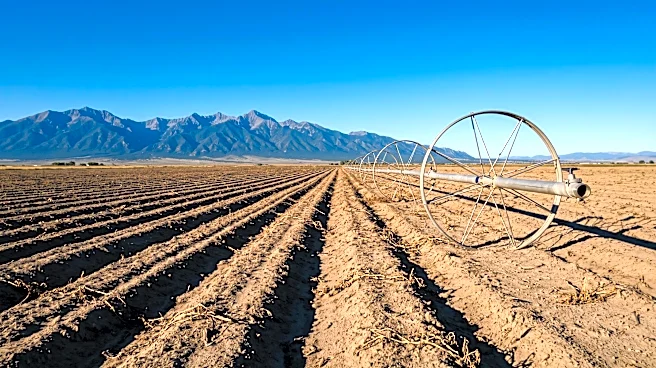
80 that damaged a Rawlins-area bridge. Ksaibati highlighted how newly released dashcam footage indicated that a median cable on the interstate prevented the incident from being far worse. Separately, UW Extension educator Micah Most provided insights in a Buffalo Bulletin article regarding ranchers destocking their herds due to severe drought conditions. Most explained that insufficient spring moisture for range grass growth and a lack of snowpack, which impacted irrigation, contributed to a poor hay crop. Additionally, UW and Sheridan College announced a new Express Transfer Agreement and the 'Future Cowboys' program, while a UW media release detailed the 'Conversations on Democracy' lecture series, featuring UW faculty and expert guests discussing contemporary issues relevant to Wyoming and the nation.
Why It's Important?
The media coverage of UW faculty underscores the university's vital role as a source of expert knowledge and research for addressing pressing state and national challenges. Professor Ksaibati's comments on infrastructure safety highlight the importance of engineering and design in mitigating the severity of accidents, a critical concern for transportation networks across the U.S. The insights from Extension educator Micah Most on drought conditions are particularly significant for Wyoming's agricultural sector, which is heavily reliant on water resources. His observations shed light on the economic and environmental impacts of climate variability on ranching communities, emphasizing the need for adaptive strategies. The new transfer agreement and lecture series further demonstrate UW's commitment to educational accessibility and fostering informed public discourse on key issues, reinforcing its position as a leading educational and research institution in the region.
What's Next?
The ongoing discussions and research by UW faculty on infrastructure resilience and drought management will likely continue to inform public policy and agricultural practices in Wyoming. Professor Ksaibati's analysis of the bridge crash could contribute to future considerations for highway safety improvements and infrastructure investments. Micah Most's observations on drought impacts will continue to be crucial for ranchers and agricultural policymakers as they plan for future seasons, potentially leading to new water conservation strategies or support programs. The 'Conversations on Democracy' lecture series is expected to continue, providing a platform for exploring contemporary issues and engaging the public in critical discussions. The Express Transfer Agreement and 'Future Cowboys' program will facilitate smoother transitions for students between Sheridan College and UW, enhancing educational pathways and workforce development in the state.
Beyond the Headlines
The consistent media engagement of UW faculty reflects a broader trend of academic institutions becoming more integrated into public discourse and problem-solving. This engagement is crucial for translating complex research into actionable insights for policymakers and the public. The issues highlighted—infrastructure safety and drought—are not unique to Wyoming but are national concerns with significant economic and social implications. The bridge incident underscores the aging infrastructure challenge across the U.S., while the drought situation points to the increasing vulnerability of agricultural systems to climate change. UW's role in these discussions exemplifies how universities can serve as critical hubs for scientific inquiry, community outreach, and policy development, fostering resilience and informed decision-making in the face of evolving challenges. This public-facing role enhances the university's impact beyond traditional academic boundaries, directly contributing to the well-being and future of the state and nation.