


What's Happening?
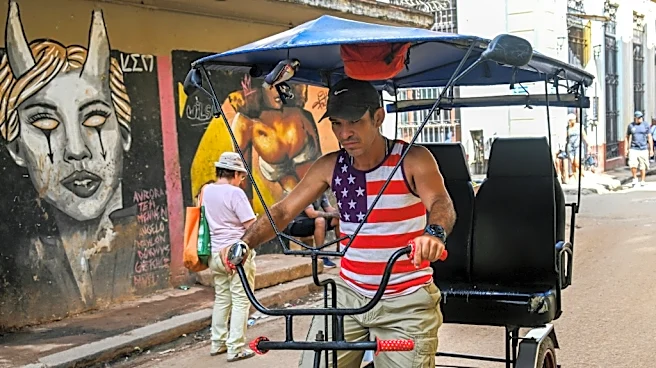
RTVI US has released a special report detailing the severe energy crisis in Cuba, which is significantly affecting daily life across the island. The report highlights prolonged blackouts, fuel shortages, and supply disruptions that have left many residents
without reliable access to electricity, transportation, and essential goods. In some areas, electricity is available for only one or two hours a day, forcing residents to rely on wood or charcoal for cooking and candles for lighting. The crisis has also impacted public transportation and access to food and medicine, with residents resorting to stockpiling basic goods.
Why It's Important?
The energy crisis in Cuba is exacerbating existing economic and social challenges, leading to increased public frustration and protests. The situation highlights the vulnerability of Cuba's infrastructure and the broader economic pressures facing the island. The crisis is likely to have a significant impact on tourism, a key sector for Cuba's economy, and could lead to further political and social unrest. The international community may need to consider providing humanitarian aid or support to help alleviate the crisis and prevent further deterioration of living conditions.
What's Next?
Cuba's government may need to seek international assistance to address the energy crisis and stabilize the situation. The ongoing protests and public dissent could lead to increased pressure on the government to implement reforms or negotiate with international partners for support. The crisis may also prompt discussions on the need for infrastructure investment and energy diversification to prevent future occurrences. Stakeholders, including international organizations and neighboring countries, will likely monitor the situation closely to assess potential impacts on regional stability and economic relations.