





What's Happening?
The U.S. Department of Agriculture's (USDA) National Institute of Food and Agriculture (NIFA) has announced the next round of funding for the Research Facilities Act Program (RFAP), making approximately $121,127,200 available for Fiscal Year 2027. An
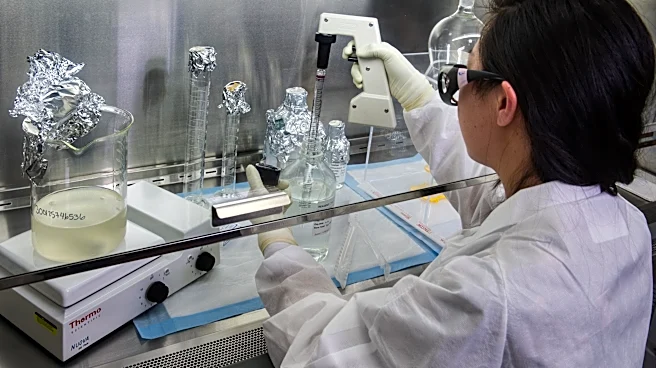
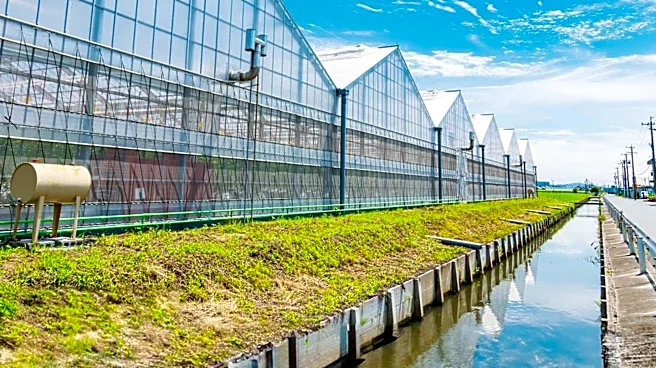
identical amount is contingent on appropriations for FY2028. The program, authorized under 7 U.S.C. 390 et seq., supports the construction, alteration, acquisition, modernization, renovation, or remodeling of agricultural research facilities. Eligible projects include research laboratories, greenhouses, animal husbandry facilities, and aquaculture units. Applications are due by March 15, 2027, with NIFA expecting to award 30 to 35 grants ranging from $100,000 to $30 million. A significant restriction is that each eligible institution, including its subordinate units, may submit only one application as a lead institution, fostering internal competition among departments like colleges of agriculture, veterinary schools, and experiment stations.
Why It's Important?
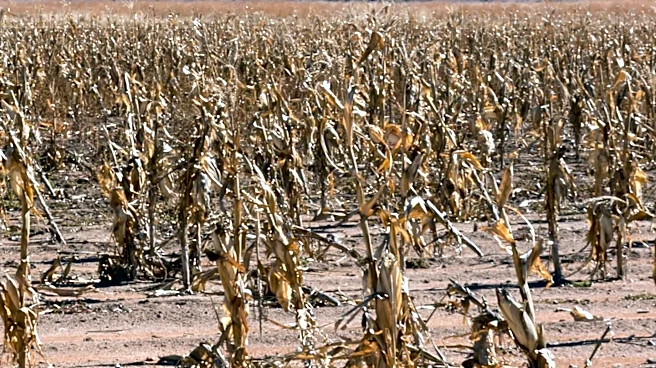
This funding is critical for modernizing and expanding agricultural research infrastructure across the United States, which often lags behind in facility upgrades despite robust research budgets. The RFAP addresses a long-standing gap where federal research grants typically cover experiments but not the physical infrastructure. By investing in state-of-the-art facilities, the program aims to enhance the capacity for groundbreaking agricultural research, which is vital for addressing national challenges such as food security, sustainable farming practices, and animal health. The requirement for a 1:1 non-federal cash match ensures significant institutional commitment and leverages federal funds effectively. The limitation of one application per institution, while creating internal competition, also forces institutions to prioritize their most impactful projects, potentially leading to more strategic and high-quality proposals that align with national agricultural priorities.
What's Next?
Eligible institutions, including land-grant universities, State Agricultural Experiment Stations, and colleges of veterinary medicine, have until March 15, 2027, to submit their applications. The application process requires a comprehensive proposal, including a capital campaign case statement, a construction plan, and federal compliance documentation. Institutions are advised to begin preparing immediately, with internal competitions to select the lead project likely occurring before the winter break. The funding notice outlines four levels of awards, from planning grants ($100,000-$200,000) to large-scale projects ($10 million-$30 million). Institutions with an active RFAP award from previous cycles may be ineligible for new funding until their current project is completed and closed out, which could impact their ability to apply for FY2027 and FY2028 funds. Review criteria emphasize project planning, financial capacity, and long-term institutional commitment, alongside scientific rationale.
Beyond the Headlines
The structure of this funding program, particularly the 1:1 cash match requirement and the single-application limit, highlights a strategic effort by the USDA to ensure that federal investments in agricultural research facilities are met with substantial institutional buy-in and robust planning. This approach encourages universities to engage in significant fundraising and strategic development, fostering stronger partnerships with state governments, local communities, and private donors. The emphasis on facility modernization also reflects a recognition that cutting-edge research requires cutting-edge infrastructure, impacting the quality and scope of scientific discoveries in agriculture. This could lead to a more resilient and innovative agricultural sector, better equipped to tackle future challenges related to climate change, disease outbreaks, and global food demand. The program's design also implicitly promotes internal strategic alignment within large university systems, as various departments must collaborate to present a unified, high-priority project.