




What's Happening?
The United States has approved an additional $1 million in funding to assist Nepal in identifying victims of recent floods. This new allocation brings the total State Department assistance for the disaster response to over $5 million. The funding is specifically
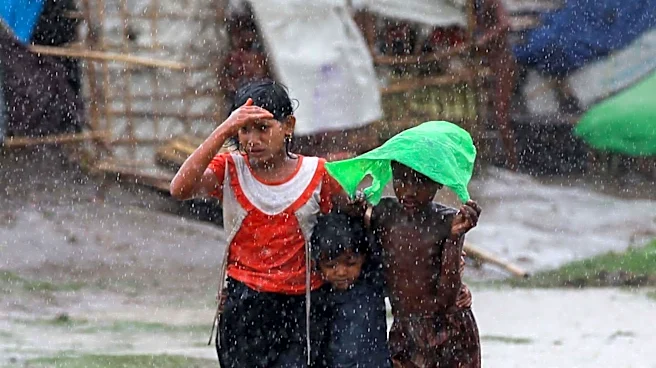
designated for forensic support to the Nepal Police, with the Bureau of International Narcotics and Law Enforcement Affairs overseeing its distribution. U.S. officials are collaborating with Nepali authorities to determine the most pressing needs, including the provision of DNA analysis kits. This forensic aid complements existing funding for emergency food, shelter, healthcare, and other relief efforts for communities affected by the floods. Additionally, FBI forensic specialists are working alongside the Nepal Police on disaster victim identification to help identify the deceased and provide answers to families, including those of American citizens.
Why It's Important?
This additional U.S. funding underscores the critical need for specialized forensic capabilities in large-scale disaster responses, particularly in identifying victims and providing closure to affected families. The involvement of FBI forensic specialists highlights the U.S.'s commitment to international humanitarian aid and its capacity to deploy advanced technical expertise in crisis situations. For Nepal, this assistance is vital for managing the aftermath of a devastating natural disaster, enabling a more systematic and accurate identification process. The broader U.S. aid package, exceeding $5 million, demonstrates a significant commitment to supporting Nepal's recovery, addressing immediate humanitarian needs such as food, shelter, and healthcare, and strengthening the country's capacity to respond to future crises. This support also reinforces diplomatic ties between the two nations, showcasing the U.S. as a reliable partner in times of need.
What's Next?
U.S. officials will continue to work closely with the Nepal Police to assess and meet the most urgent requirements for forensic support, including the procurement and deployment of DNA analysis kits. The State Department has indicated that the response is a rapidly evolving operation, and the U.S. is prepared to adjust its assistance based on changing conditions and Nepal's specific needs. The U.S. military's Civil Affairs Team on the ground will continue its work on overseas humanitarian, disaster, and civic aid projects to address post-crisis humanitarian needs. Further collaboration between U.S. and Nepali authorities is expected to ensure the effective utilization of the aid and to support long-term recovery efforts. The ongoing presence of U.S. forensic and military personnel suggests a sustained commitment to assisting Nepal in its recovery and resilience-building efforts.
Beyond the Headlines
The U.S.'s focus on forensic support in disaster response highlights a growing recognition of the psychological and social impact of unidentified victims on communities. Beyond immediate relief, accurate victim identification is crucial for legal processes, inheritance claims, and cultural and religious rites, all of which contribute to the long-term healing of a society. This type of specialized aid also reflects a shift towards more comprehensive disaster assistance that addresses not only physical needs but also the complex human dimensions of tragedy. The collaboration between U.S. and Nepali law enforcement and military personnel in such a sensitive area can also foster deeper institutional ties and knowledge transfer, potentially enhancing Nepal's indigenous capabilities for future disaster responses. This initiative subtly reinforces the U.S.'s role as a global leader in humanitarian efforts, emphasizing technical expertise and human dignity in its foreign policy.