

What's Happening?
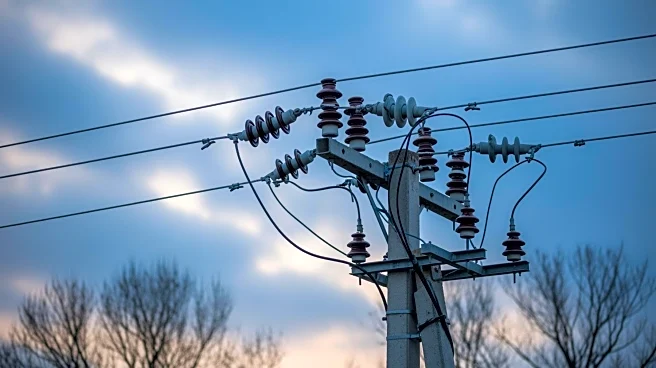
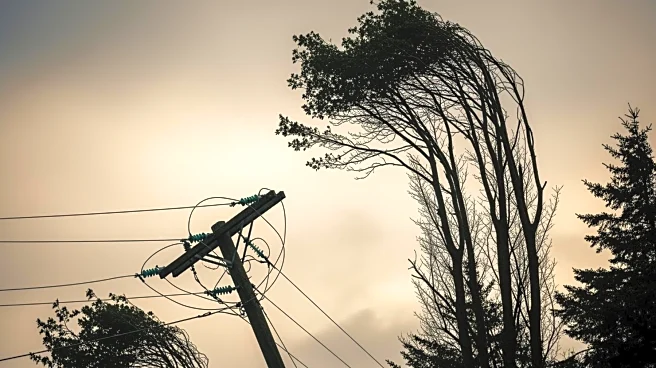
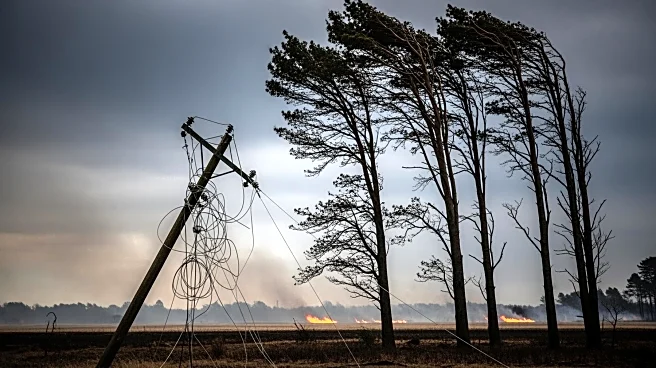
Strong winds swept through the Pittsburgh area on Friday, resulting in approximately 280,000 customers losing power as trees and power lines were downed. The National Weather Service had issued wind warnings across Ohio, West Virginia, and southwestern
Pennsylvania, with wind gusts reaching 59 mph at Allegheny County Airport and Pittsburgh International Airport. As the winds began to subside around 10:30 p.m. on Friday, restoration efforts were initiated by crews from Duquesne Light and First Energy. Duquesne Light reported over 117,000 customers without power, while First Energy reported more than 58,000 customers still affected as of Saturday morning. The hardest-hit counties included Allegheny, Butler, Washington, and Westmoreland. Damage reports included a tree falling on a home in Pittsburgh's Marshall-Shadeland neighborhood and several road closures due to downed trees and power lines.
Why It's Important?
The power outages caused by the high winds have significant implications for residents and businesses in the affected areas. The loss of electricity can disrupt daily life, affecting everything from heating and cooking to communication and transportation. For businesses, especially those reliant on refrigeration or continuous operations, the outages can lead to financial losses. The situation underscores the vulnerability of infrastructure to extreme weather events, highlighting the need for robust emergency response plans and infrastructure resilience. The restoration efforts by utility companies are crucial in minimizing the impact on the community and ensuring safety, particularly in addressing critical and emergent needs first.
What's Next?
Utility companies like Duquesne Light and First Energy are focusing on restoring power as quickly and safely as possible, prioritizing critical needs. The restoration process may take time due to the extent of the damage and hazardous conditions. Residents are advised to avoid unnecessary travel to allow emergency and utility crews to work efficiently. The situation may prompt discussions on improving infrastructure resilience to withstand future extreme weather events. Additionally, local authorities and emergency services will likely review their response strategies to enhance preparedness for similar incidents in the future.