







What's Happening?
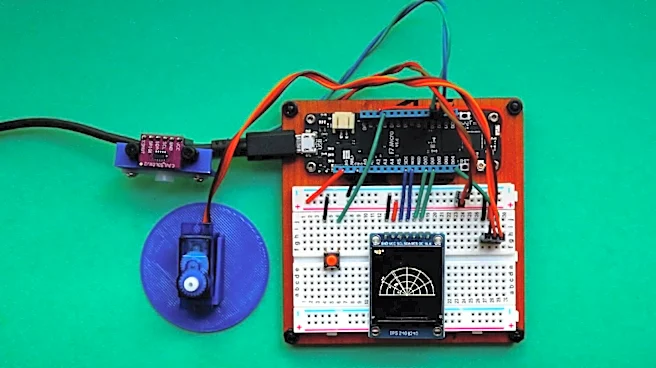
A DIY enthusiast is embarking on a project to build custom hardware for home automation, focusing on Zigbee technology. The primary motivation is to achieve local control over smart home devices, thereby avoiding reliance on major tech companies like
Google or Apple for data privacy. The project utilizes ESP32-C6 microcontrollers, which support Wi-Fi, Bluetooth, and Zigbee/Thread. The developer plans to create various sensors, including presence/motion, light, window open, and environmental sensors. The choice of Zigbee is driven by its potential for power savings over Wi-Fi and a desire to minimize the number of IoT Wi-Fi devices. The developer is considering using CircuitPython or MicroPython for programming due to familiarity with Python, and exploring options like using the ESP32-C6 as a co-processor or leveraging ESPHome's recent ESP32 Zigbee support.
Why It's Important?
This initiative highlights a growing trend among consumers to seek greater control and privacy in their smart home ecosystems. By developing custom hardware and utilizing open-source software like Home Assistant, individuals can reduce their dependence on proprietary systems and mitigate concerns about data collection by large corporations. The project's focus on Zigbee technology is significant because it offers a low-power, mesh networking standard well-suited for a wide range of smart home devices, potentially leading to more efficient and reliable home automation solutions. If successful, such DIY approaches could inspire more widespread adoption of open-source hardware and software in the smart home sector, fostering innovation and empowering users with more customizable and secure options.
What's Next?
The next steps for this project involve ensuring the ESP32-C6's Zigbee support is up-to-date within the esp-idf and arduino-sdk. The developer will then proceed with designing and building the various sensors, potentially using the ESP32-C6 as a co-processor for Zigbee communication or integrating with ESPHome's Zigbee capabilities. The project aims to create a fully localized home automation system, offering an alternative to cloud-dependent solutions. Future updates are anticipated as the developer progresses with the hardware and software integration, potentially sharing insights and code with the broader DIY and home automation communities.
Beyond the Headlines
This DIY home automation project touches upon broader themes of digital sovereignty and the right to privacy in an increasingly connected world. As smart home technology becomes more ubiquitous, concerns about data security, vendor lock-in, and the potential for surveillance by tech giants are growing. Initiatives like this demonstrate a grassroots movement towards decentralized and user-controlled smart home solutions. It also underscores the importance of open-source hardware and software in enabling individuals to understand, modify, and control the technology they use, fostering a more transparent and secure technological landscape. The success of such projects could influence future product development in the smart home industry, pushing manufacturers towards more open standards and user-centric designs.