








What's Happening?
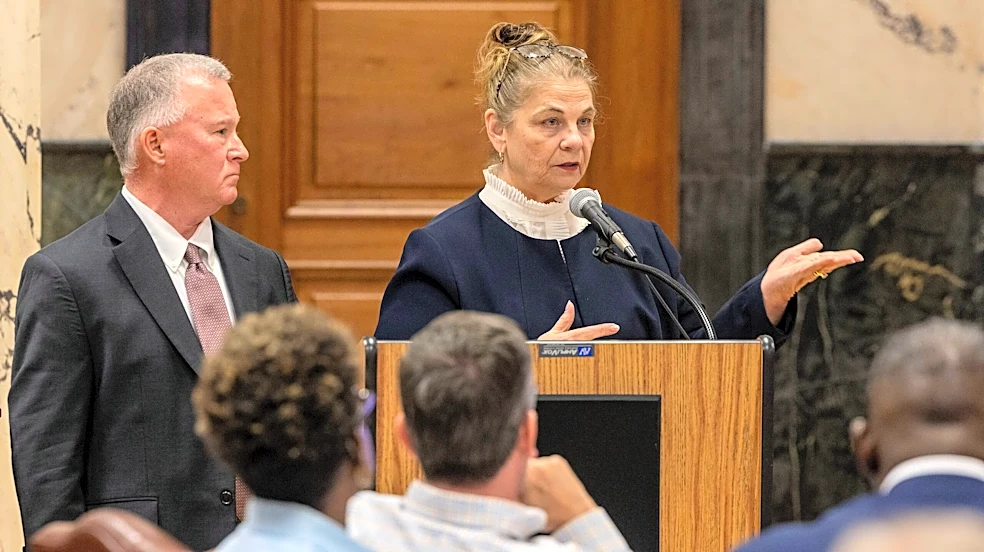
Mississippi Governor Tate Reeves has announced a significant leadership change within the state's primary law enforcement agency, appointing Capitol Police Chief Bo Luckey as the new commissioner of the Mississippi Department of Public Safety (MDPS).
Luckey replaces Sean Tindell, who is stepping down after more than six years in the role to focus on his candidacy for Mississippi attorney general. Tindell's tenure as commissioner was the third-longest in MDPS history, an agency where commissioners typically serve for two to two and a half years. Luckey brings 22 years of law enforcement experience to the position, including leadership roles at municipal, county, state, and federal levels. His background includes a decade as a senior investigator in the Mississippi Attorney General’s Office, focusing on human trafficking and consumer protection, as well as experience with the Brandon Police Department, Rankin County Sheriff’s Department, DEA, and Homeland Security Investigations. Since May 2022, Luckey served as chief of the Mississippi Capitol Police, where he oversaw a state-mandated jurisdictional expansion within Jackson, the state capital.
Why It's Important?
This leadership transition is important for Mississippi's public safety landscape. Sean Tindell's departure marks the end of a period characterized by significant operational reorganizations within the MDPS, including the elimination of a backlog of over 2,000 uncompleted autopsy reports and a drastic reduction in forensic drug analysis wait times. Under his leadership, the state also added nearly 300 state troopers through seven consecutive Highway Patrol cadet classes. Bo Luckey's appointment signals a continued focus on law enforcement, particularly given his success in curbing violent crime and lowering Jackson's homicide rate during his time as Capitol Police Chief. His immediate priority to secure competitive pay and compensation for sworn officers across all MDPS divisions addresses a critical issue for recruitment and retention in law enforcement, especially in light of recent legislative changes to the Public Employees’ Retirement System (PERS) that increased service years required for retirement. This move could impact the morale and effectiveness of the state's law enforcement personnel.
What's Next?
Bo Luckey's immediate focus as the new MDPS commissioner will be to advocate for increased pay and compensation adjustments for sworn officers across all MDPS divisions during the upcoming legislative session. This includes the Highway Patrol, Mississippi Bureau of Investigation (MBI), and Capitol Police. He also plans to elevate basic training and professional standards statewide to enhance accountability within the law enforcement community. Sean Tindell will remain with MDPS until November 30 to facilitate a smooth administrative transition. The state legislature's response to Luckey's push for better officer compensation will be a key indicator of future support for law enforcement. Additionally, the continued efforts to reduce crime rates in Jackson, building on the progress made under Luckey's leadership at Capitol Police, will be closely watched. The new commissioner's approach to addressing the challenges of under-resourced rural areas and struggling municipalities, as highlighted by Tindell, will also be a significant development.
Beyond the Headlines
The appointment of Bo Luckey to lead the MDPS extends beyond a simple change in leadership; it reflects a broader strategy to address public safety challenges in Mississippi, particularly in urban areas like Jackson. The success of the Capitol Police under Luckey in reducing violent crime, despite initial community pushback against jurisdictional expansion, highlights a potential model for state-level intervention in local law enforcement. This raises deeper questions about the balance between state and local control over policing and the effectiveness of centralized law enforcement efforts. Furthermore, Luckey's emphasis on competitive pay and professional standards touches upon the ethical and societal implications of attracting and retaining qualified law enforcement personnel. The long-term impact of these changes on community trust, police accountability, and the overall perception of law enforcement in Mississippi will be a critical measure of the success of this new leadership.