
What's Happening?
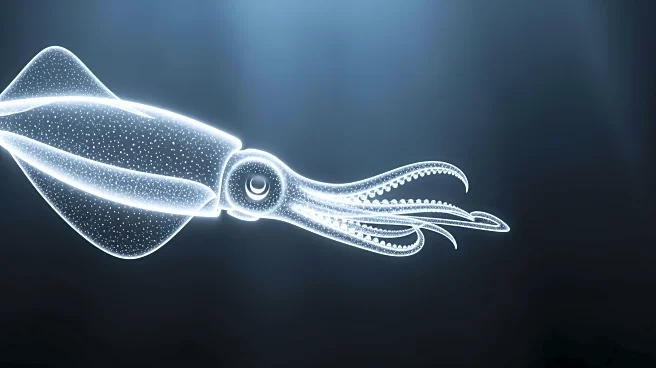
Scientists have successfully sequenced the genome of the vampire squid, revealing that its chromosomes closely resemble those of squids and cuttlefish, despite being part of the octopus order. This discovery
provides insights into the evolutionary history of cephalopods, suggesting that the vampire squid has retained many ancestral traits over millions of years. The research, published in the journal iScience, highlights the vampire squid as a 'living fossil,' offering a glimpse into the genetic makeup of ancient cephalopods.
Why It's Important?
The sequencing of the vampire squid's genome is a significant advancement in understanding cephalopod evolution. It sheds light on the genetic divergence between squids and octopuses, which occurred approximately 300 million years ago. This research could have broader implications for evolutionary biology, helping scientists understand how certain species retain ancestral traits while others evolve rapidly. The findings also underscore the importance of studying rare and elusive species, which can provide unique insights into the history of life on Earth.
Beyond the Headlines
The vampire squid's genome sequencing highlights the challenges of studying deep-sea organisms, which are often difficult to access and study in their natural habitats. The research underscores the potential of genetic analysis to unlock secrets of the deep sea, a largely unexplored frontier. This study also raises questions about the conservation of deep-sea species, which may hold key information about Earth's evolutionary past and the resilience of life in extreme environments.