






What's Happening?
A recent study published in 'Weather and Climate Dynamics' reveals that the Southern Ocean is experiencing increased rainfall as a result of climate change. The research, based on 45 years of daily observations and climate data from the ERA5 system, indicates
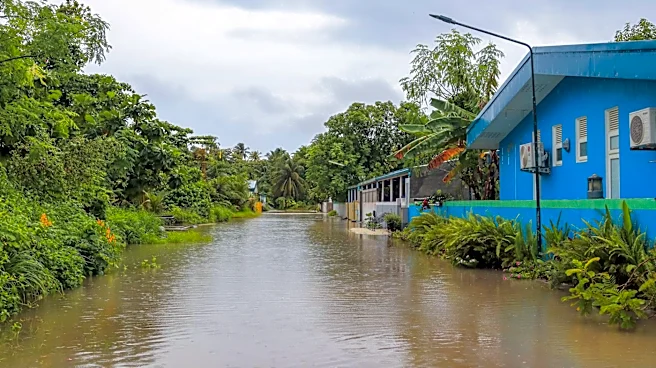
that while the frequency of storms has remained stable, the intensity of rainfall has increased. This phenomenon is particularly evident around Macquarie Island, located between Tasmania and Antarctica, where annual rainfall has risen by about 28% since 1979. The study attributes this increase to stronger moisture content in storms rather than a rise in storm numbers. The findings highlight a significant shift in weather patterns, with the Southern Ocean storm track moving closer to Antarctica.
Why It's Important?
The increase in rainfall over the Southern Ocean has potential global climate implications. More freshwater entering the ocean's surface can disrupt the mixing of water layers, affecting ocean currents and potentially altering one of the world's largest natural carbon sinks. This could have a cascading effect on global climate systems, as changes in ocean salinity and temperature influence the movement of carbon and nutrients. The study also notes that increased evaporation is necessary to sustain the heavier rainfall, suggesting that the Southern Ocean is losing more heat to the atmosphere. This 'sweating' effect could further exacerbate global warming, making it crucial to understand these changes and their broader impacts.
What's Next?
Further research is needed to determine the extent of these changes across the wider Southern Ocean and their potential impact on global climate patterns. Scientists emphasize the importance of monitoring these developments, as they could serve as early warning signs of more significant shifts in the Earth's climate system. Understanding the interactions between increased rainfall, ocean salinity, and carbon cycling will be critical in predicting future climate scenarios and developing strategies to mitigate adverse effects.