


What's Happening?
Elbit Systems Ltd. has been awarded a $228 million contract to supply its Iron Fist active protection system for the U.S. Army's Bradley Fighting Vehicle. This contract, announced by the U.S. government and awarded through General Dynamics Ordnance and Tactical
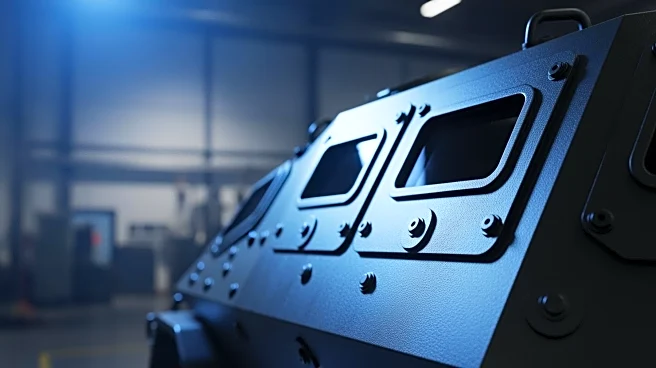
Systems, will be executed over three years. The Iron Fist system is designed to detect and intercept incoming threats, providing 360-degree protection against various anti-armor weapons, including anti-tank rockets and unmanned aerial systems. The system's compact design allows for integration onto existing armored platforms, and it has been deployed by the Israel Defense Forces and selected by several NATO members. This marks the third time the U.S. Army has chosen Iron Fist, highlighting ongoing investment in vehicle protection technologies amid evolving battlefield threats.
Why It's Important?
The contract underscores the growing importance of active protection systems in modern military strategy, driven by the proliferation of advanced anti-armor weapons. The U.S. Army's decision to invest in the Iron Fist system reflects a commitment to enhancing the survivability of its armored vehicles against emerging threats. This development also highlights the deepening industrial cooperation between U.S. defense contractors and international suppliers, particularly in niche technology areas. The integration of such systems is crucial for maintaining battlefield superiority and ensuring the safety of military personnel. The contract also signifies a strategic move to bolster defense capabilities in response to lessons learned from recent conflicts in Ukraine and the Middle East.
What's Next?
The implementation of the Iron Fist system on Bradley Fighting Vehicles will likely lead to further evaluations and potential expansions of active protection technologies across other military platforms. As the U.S. Army continues to adapt to new threats, additional contracts and collaborations with international defense companies may emerge. The success of this program could influence future procurement decisions and drive innovation in vehicle protection systems. Stakeholders, including military leaders and defense contractors, will closely monitor the system's performance and its impact on operational effectiveness.