








What's Happening?
Philippine President Ferdinand Marcos Jr. successfully negotiated the release of 24 Filipinos who had been detained in Siberia without charges. This development followed a meeting between President Marcos and Russian President Vladimir Putin, during which
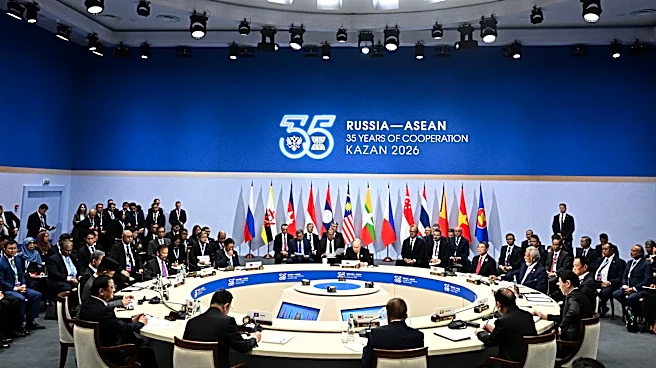
Marcos expressed concern over the detainees. The Filipinos had been held for approximately nine months in Irkutsk, a city in southeastern Siberia. The release was confirmed by Philippine officials, and the individuals were scheduled to return to Manila on two separate flights. The first group was expected to be welcomed by Philippine Foreign Secretary Theresa Lazaro. The meeting between Marcos and Putin took place on the sidelines of a summit commemorating the 35th anniversary of diplomatic relations between the Association of Southeast Asian Nations (ASEAN) and Russia. Marcos, who currently holds the rotating presidency of ASEAN, emphasized the importance of resolving the issue, highlighting the lack of information about the detainees' conditions.
Why It's Important?
The release of the 24 Filipinos is significant as it underscores the diplomatic influence and negotiation capabilities of the Philippine government under President Marcos. This event highlights the importance of international diplomacy in resolving issues involving citizens abroad. The incident also draws attention to the conditions faced by foreign workers in Russia, where approximately 15,000 Filipinos reside. The successful negotiation may strengthen the Philippines' diplomatic relations with Russia and enhance its standing within ASEAN. Additionally, it reflects the broader geopolitical dynamics in the region, where ASEAN countries are navigating complex relationships with major powers like Russia.
What's Next?
Following the release, the Philippine government may focus on ensuring the safe return and reintegration of the released individuals. There could be increased diplomatic engagement between the Philippines and Russia to prevent similar incidents in the future. The Philippine government might also review its policies and support systems for overseas workers to better protect their rights and welfare. On a broader scale, ASEAN may continue to engage with Russia on various diplomatic fronts, potentially using this incident as a case study for effective negotiation and conflict resolution.