





What's Happening?
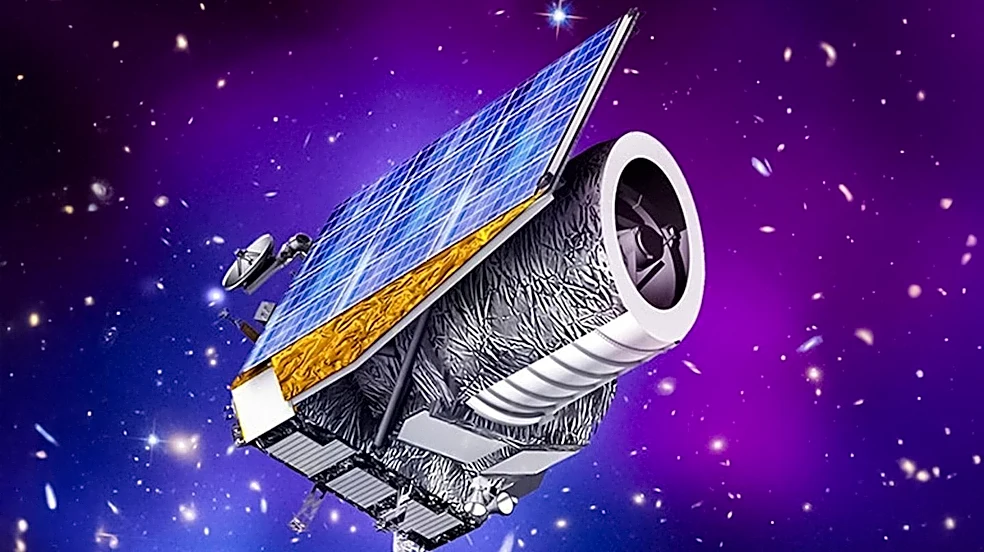
NASA's Nancy Grace Roman Space Telescope has demonstrated optical performance nearly 30% better than initially required, following extensive testing and precision adjustments by engineers. The telescope's Wide Field Instrument, crucial for its primary
scientific goals, is now delivering exceptionally sharp views. Engineers at NASA's Goddard Space Flight Center conducted a series of tests, including evaluating the instrument's 18 detectors, the element wheel for filters, and the calibration system using internal LEDs. They also refined the telescope's optical alignment, making a minute adjustment to the secondary mirror, equivalent to one-sixteenth the diameter of a human hair. This meticulous work has resulted in an optical error of just 63 nanometers RMS, significantly surpassing the initial requirement of approximately 90 nanometers RMS. The Coronagraph Instrument also received focus corrections, now performing at expected high levels.
Why It's Important?
The superior performance of the Roman Space Telescope has profound implications for U.S. scientific research and its understanding of the universe. The enhanced sharpness of its images will allow scientists to gather more detailed data, significantly improving investigations into major cosmic mysteries such as dark matter and dark energy. These discoveries could lead to breakthroughs in fundamental physics and cosmology, influencing future scientific endeavors and technological developments. The mission's ability to conduct vast surveys of the universe with unprecedented clarity will provide a wealth of information for astronomers and astrophysicists, potentially accelerating the pace of discovery. This achievement also validates NASA's engineering capabilities and its investment in advanced space technology, reinforcing the U.S.'s leadership in space exploration and scientific innovation. The detailed images will contribute to a more comprehensive understanding of galaxy formation, exoplanets, and the overall structure of the cosmos.
What's Next?
With the Wide Field Instrument and Coronagraph Instrument performing beyond expectations, the Roman Space Telescope is moving closer to regular scientific operations. Engineers will continue fine-tuning the Coronagraph Instrument's camera settings and identifying optimal configurations for its deformable mirrors to block unwanted light. Once fully operational, Roman will embark on its mission to map about one-third of the extragalactic sky, searching for new worlds, mapping billions of galaxies, and hunting for the Milky Way's missing neutron stars. The exceptionally sharp images it will capture are expected to provide a continuous stream of data for scientific analysis for years to come. This data will be used to train artificial intelligence models for future autonomous missions, further advancing space exploration capabilities. The ongoing success of the Roman Telescope will likely inspire future generations of scientists and engineers, ensuring continued U.S. innovation in space science.
Beyond the Headlines
The Roman Space Telescope's unexpected optical precision represents more than just a technical achievement; it signifies a leap in humanity's ability to perceive and comprehend the universe. The enhanced clarity of its observations could lead to paradigm shifts in our understanding of cosmic phenomena, potentially challenging existing theories about the universe's origins and evolution. This level of detail might also enable the detection of subtle cosmic features previously invisible, opening entirely new avenues of research. Furthermore, the meticulous engineering and calibration process highlights the critical role of precision and attention to detail in complex scientific endeavors. The data collected will not only serve the scientific community but also contribute to public engagement with science, fostering a deeper appreciation for space exploration and the mysteries of the cosmos among the U.S. populace and globally.