




What's Happening?
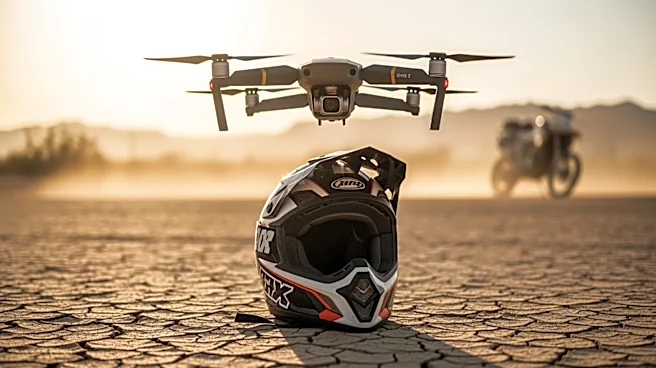
The U.S. Marine Corps is discovering that individuals with backgrounds in operating dirt bikes, jet skis, or boats may excel as drone pilots, contrary to initial expectations that tech-savvy Gen Z Marines would have an advantage. At Camp Pendleton, California,
the 1st Marine Division's drone school is training Marines to operate drones with explosive payloads, a skill that requires dexterity similar to handling a motorcycle throttle. The training program, which aims to prepare 500 troops annually, has faced challenges with students struggling to adapt from simulator controls to real-world systems. To address this, instructors are using smaller drones with toggle resistance to improve handling skills. The course is currently open to infantry personnel, including riflemen and machine gunners, and mirrors training at Quantico, Virginia.
Why It's Important?
The integration of drones into military operations is becoming increasingly critical, as demonstrated by conflicts such as the war in Ukraine. The ability to effectively operate drones can provide significant tactical advantages on the battlefield, including surveillance and precision strikes. The Marine Corps' focus on identifying and training effective drone pilots is part of a broader effort to enhance military capabilities in response to evolving threats. By recognizing the potential of individuals with mechanical and outdoor experience, the Marines are expanding their pool of skilled operators, which could lead to more effective deployment of drone technology in combat scenarios.
What's Next?
The Marine Corps will continue to refine its drone training program, potentially expanding it to include a wider range of personnel and improving simulator technology to better replicate real-world conditions. As the military increasingly relies on drones, there may be further developments in training methodologies and technology to ensure that operators are well-prepared for the demands of modern warfare. Additionally, the success of this program could influence other branches of the armed forces to adopt similar training approaches, further integrating drone technology into U.S. military strategy.