


What's Happening?
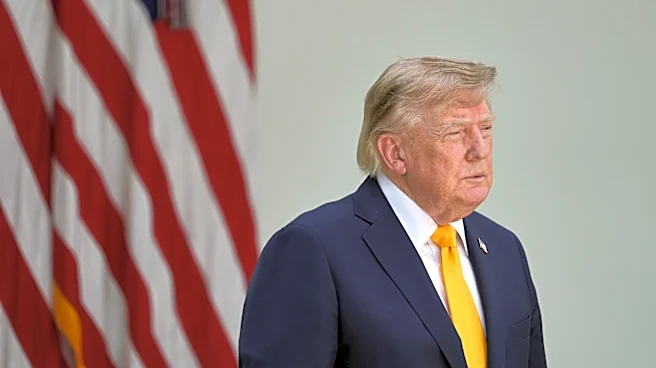
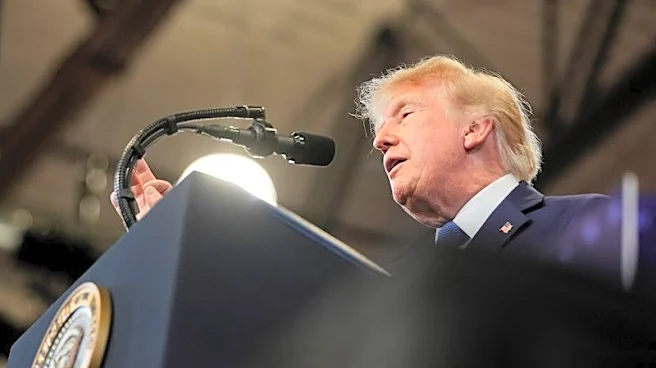
President Trump's administration has imposed sanctions on officials of the International Criminal Court (ICC), including judges and senior prosecutors, through Executive Order (EO) 14203, issued on February 6, 2025. These sanctions target individuals
involved in investigations into alleged crimes in Afghanistan and Palestine. The U.S. has sanctioned nine of the 18 ICC judges and three ICC prosecutors, along with three Palestinian human rights organizations and UN Special Rapporteur Francesca Albanese, for their engagement with the ICC regarding investigations into U.S. or Israeli nationals without consent. The sanctions include frozen bank accounts, denial of financial services, and travel bans. President Trump declared a national emergency to address the perceived threat posed by the ICC's actions, arguing that the court lacks jurisdiction over the U.S. or Israel as neither is a State Party to the Rome Statute. Four prominent human rights organizations have filed a lawsuit challenging EO 14203, alleging violations of constitutional rights and international law.
Why It's Important?
These sanctions represent a significant escalation in the U.S. stance against the ICC and have profound implications for international law and human rights advocacy. The U.S. action is seen by critics as an attempt to undermine the independence of an international judicial institution and to shield U.S. and Israeli officials from potential prosecution for alleged war crimes. This move creates a chilling effect on human rights organizations and individuals who collaborate with the ICC, as they face severe penalties for their work. The lawsuit filed by human rights groups highlights concerns about freedom of association, speech, and the rule of law, both domestically and internationally. The U.S. position, which supports international criminal justice in some contexts (e.g., Russian President Vladimir Putin's arrest warrant) but rejects ICC authority over its own citizens or allies, raises questions about the consistency and universality of international legal principles.
What's Next?
The legal challenges against EO 14203 are expected to proceed in U.S. courts, with potential consolidation of multiple lawsuits. These cases will test the constitutional limits of executive power and the application of international law within the U.S. legal system. Internationally, the sanctions are likely to continue to draw condemnation from the ICC, the UN, and the EU, potentially straining diplomatic relations. The ICC has affirmed its commitment to continuing its work despite the threats, indicating a resolve to uphold its mandate. The long-term impact could include a re-evaluation of the ICC's operational strategies, increased support from its State Parties, and ongoing debates about the need for reform to enhance its legitimacy and effectiveness in the face of geopolitical pressures.
Beyond the Headlines
The U.S. sanctions against the ICC delve into the complex interplay between national sovereignty and international justice. The U.S. argument that the ICC lacks jurisdiction over non-State Parties, while legally sound under the Rome Statute, is complicated by the ICC's territorial jurisdiction over crimes committed on the territory of a State Party (e.g., Palestine). This situation highlights a fundamental tension: the desire for accountability for grave international crimes versus the protection of national interests and personnel. The sanctions also raise ethical questions about the selective application of international law and the potential for powerful nations to undermine institutions designed to ensure universal justice. The outcome of these legal and political battles could significantly influence the future credibility and operational capacity of international criminal justice mechanisms.