







What's Happening?
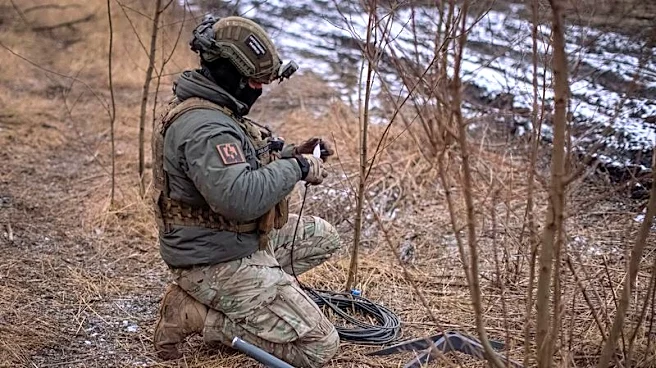
The U.S. Army is actively exploring how autonomous weapons can fundamentally change the way brigades fight, moving beyond individual robotic systems to integrate them across entire formations. Recent exercises, such as Project Sandhills 2.0 at Fort Bragg,
tested unmanned systems for tasks like breaching obstacles and reducing soldier exposure to hazards. The Army's fiscal 2026 budget includes an 'Autonomy Formation' effort to accelerate robotics for armored and infantry units. Furthermore, the U.S. Army Futures and Autonomous Systems Command (FASCOM) was established on October 1 to integrate autonomous capabilities into various formations, prioritizing areas like fires, combat vehicles, and reconnaissance for fielding by fiscal 2028. While human decision-making remains central, the goal is to scale autonomy to transform brigade-level operations.
Why It's Important?
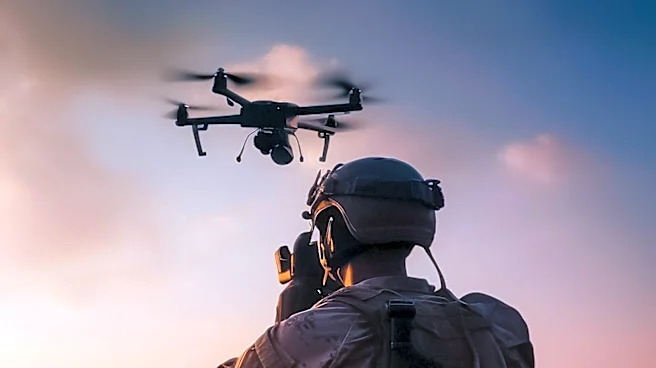
This initiative is profoundly important for the U.S. military and defense industry, as it represents a strategic pivot towards integrating autonomous systems at a foundational level of combat. For U.S. defense contractors, this opens up massive opportunities for developing and supplying autonomous trucks, robotic breaching payloads, drone swarms, and counter-UAS tools. The shift could lead to significant investments in AI, robotics, and advanced sensor technologies. The potential to reduce human exposure to battlefield hazards and enhance combat power could give the U.S. a critical advantage in future conflicts. However, it also necessitates substantial changes in training, doctrine, and organizational structures, impacting military personnel and resource allocation. The success of this transformation will influence U.S. defense policy and its global military posture.
What's Next?
The U.S. Army will continue to move beyond experimentation into the acquisition and organizational changes necessary for widespread autonomous integration. This includes the Engineer Autonomous Breaching Capability program, with prototypes expected to be assessed in early 2027. FASCOM will play a crucial role in integrating autonomous capabilities across various formations, with a focus on fielding systems by fiscal 2028. The Army will also need to address challenges identified in research, such as soldier-robot trust, communication in degraded environments, and cognitive load. Training brigades with meaningful quantities of autonomous systems at home stations will be critical to refine tactics and identify failures before these systems reach combat training centers. The lessons from conflicts like Ukraine, which show the value of unmanned systems but also their limitations, will inform these next steps.
Beyond the Headlines
The U.S. Army's push for autonomous brigades raises profound ethical, legal, and societal questions. The increasing reliance on machines for combat roles, even with human oversight, challenges traditional notions of warfare and accountability. The concept of 'mission command' for autonomous formations implies a significant shift in leadership and decision-making structures. There are also concerns about the potential for an arms race in autonomous weapons and the implications for international stability. Societally, this transformation could impact public perception of military service and the role of technology in conflict. The long-term implications include a redefinition of what it means to be a soldier, the development of new ethical guidelines for AI in warfare, and the need for robust cybersecurity to protect these highly integrated systems from adversarial exploitation.