



What's Happening?
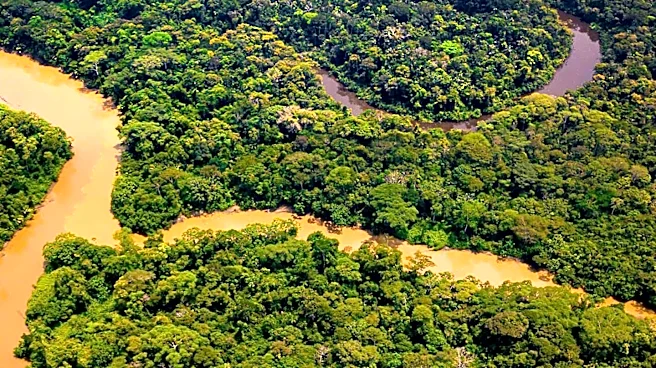
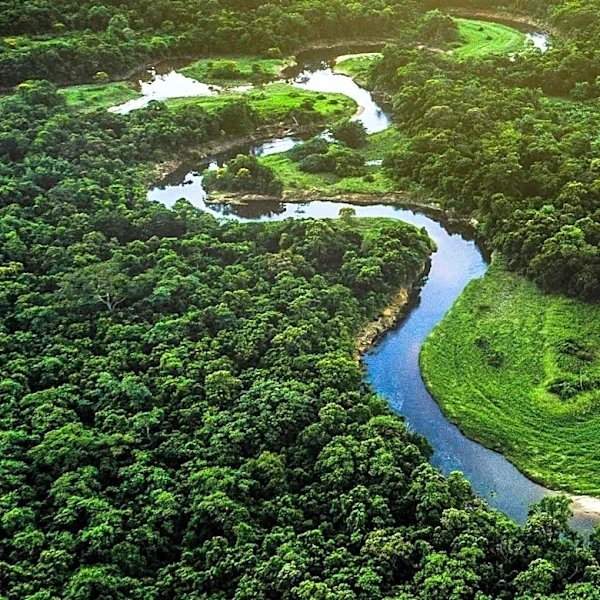
Researchers from Florida Atlantic University (FAU) have uncovered a previously unobserved world of wildlife within the Congo Basin rainforest, the second-largest rainforest globally. This discovery was made in the Democratic Republic of the Congo's (DRC)
Lomami National Park. The FAU team developed a non-invasive method, installing infrared cameras from the forest floor to the canopy, to create a 3D view of the region's biodiversity. This approach allowed them to study mammal communities across different forest layers—ground, understory-midstory, and canopy—revealing how various species share and utilize these spaces. The findings, published in the journals Ecology and Journal of Mammalogy, documented 47 mammal taxa, including primates, carnivores, rodents, artiodactyls, and pangolins, with 32 taxa detected on the ground, 23 in the understory, and 22 in the canopy. Notably, 25% of arboreal mammals preferred the understory, a detail that would have been missed by traditional ground-focused studies.
Why It's Important?
This research by Florida Atlantic University scientists significantly advances the understanding of biodiversity in one of the world's most critical ecosystems, the Congo Basin rainforest. For U.S. scientific institutions and conservation organizations, these findings underscore the importance of innovative research methodologies and international collaboration in addressing global environmental challenges. The discovery of previously unobserved layered biodiversity highlights the inadequacy of traditional two-dimensional surveys and emphasizes the need for comprehensive, multi-layered approaches to ecological study. This improved understanding is crucial for developing more effective conservation strategies, particularly in regions like the Congo Basin, which are understudied due to insecurity and limited infrastructure. The insights gained can inform U.S. foreign policy on environmental protection, funding for international research, and partnerships aimed at combating climate change and biodiversity loss, ultimately contributing to global ecological stability and resource management.
What's Next?
The findings from Florida Atlantic University researchers are expected to catalyze further comprehensive biodiversity surveys in the Congo Basin and other understudied rainforests globally. The success of the 3D camera trapping method will likely encourage its adoption by other research institutions and conservation organizations, leading to a more nuanced understanding of forest ecosystems. This enhanced data will be crucial for informing and refining conservation policies and practices, potentially leading to the establishment of new protected areas or the modification of existing management plans to better safeguard layered habitats. Furthermore, the research may stimulate increased funding for ecological studies in regions facing similar challenges of insecurity and limited infrastructure. The insights into species distribution and behavior across different forest layers could also influence international efforts to combat illegal wildlife trade and habitat destruction, as a clearer picture of species presence and movement becomes available.
Beyond the Headlines
The FAU research in the Congo Basin transcends mere species cataloging, offering profound implications for the philosophy and methodology of conservation science. By demonstrating that a significant portion of biodiversity exists in previously overlooked forest layers, it challenges the anthropocentric bias in ecological observation, which often focuses on ground-level interactions. This 'vertical' perspective reveals the intricate complexity of ecosystems and the interconnectedness of life within them, suggesting that conservation efforts must adopt a holistic, multi-dimensional approach to be truly effective. Ethically, it underscores the responsibility of developed nations and their scientific institutions to contribute to understanding and preserving global biodiversity, especially in regions with limited local research capacity. Culturally, it highlights the intrinsic value of these ecosystems, not just as carbon sinks or resource providers, but as dynamic, living entities with hidden wonders, fostering a deeper appreciation for the natural world and potentially influencing environmental education and public engagement worldwide.