



What's Happening?
In a significant development, wind and solar energy have overtaken fossil fuels as the primary sources of electricity in the European Union for the first time. According to a report by the think tank Ember, a third of the EU's electricity in 2025 was
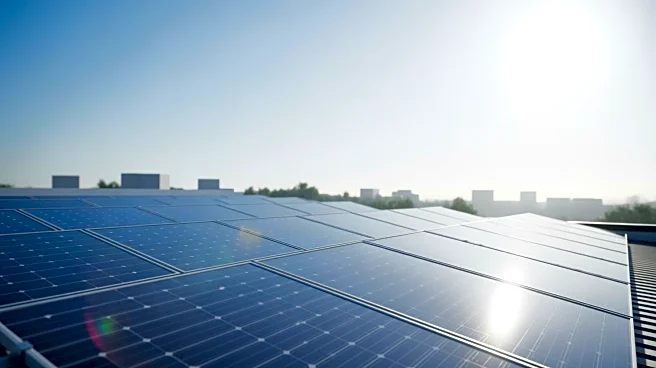
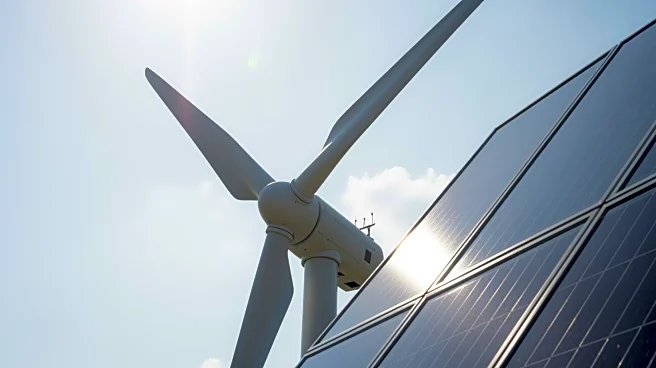
generated from wind and solar, compared to 29% from fossil fuels such as coal and gas. This shift marks a pivotal moment in the EU's transition towards renewable energy, with nuclear power contributing 20% to the electricity mix. The EU has set a target for renewables to constitute 42.5% of its energy grid by the end of the decade, as part of its broader strategy to cut greenhouse gas emissions by 55% by 2030, relative to 1990 levels. The report highlights the rapid growth of solar power, which has increased by more than 20% annually for four consecutive years, contributing to renewables accounting for 48% of the EU's electricity in 2025.
Why It's Important?
This transition to renewable energy sources is crucial for the EU's efforts to combat climate change and reduce dependency on fossil fuels, which are subject to price volatility and geopolitical tensions. The shift not only supports the EU's environmental goals but also enhances energy security by reducing reliance on imported fossil fuels. The move towards renewables is expected to stabilize energy prices and create economic opportunities in the green energy sector. As the EU continues to lead in renewable energy adoption, it sets a precedent for other regions to follow, potentially accelerating global efforts to address climate change.
What's Next?
The EU aims to further increase the share of renewables in its energy mix, with ongoing investments in wind and solar infrastructure. Policymakers are likely to focus on enhancing grid capacity and storage solutions to accommodate the growing share of intermittent renewable energy. The success of the EU's energy transition could influence global energy policies and encourage other nations to adopt similar strategies. Additionally, the EU's progress will be closely monitored by industries and environmental groups, as it could impact international climate negotiations and commitments.