
What's Happening?
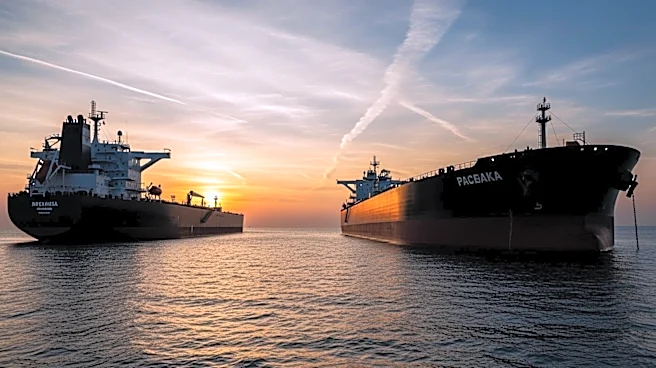
A ship has been seized near the Strait of Hormuz, complicating U.S. efforts to resolve the ongoing conflict with Iran. This incident coincides with President Donald Trump's visit to Beijing, where discussions
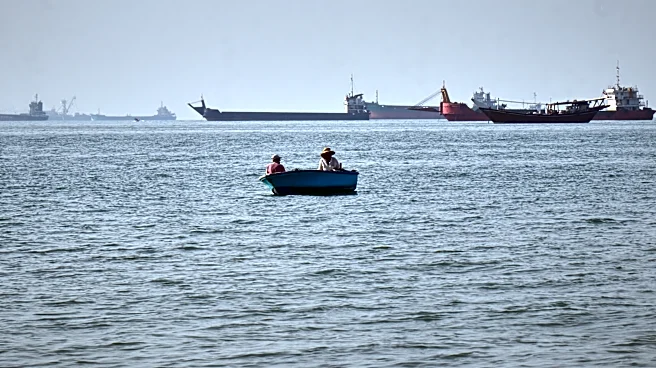
about the Middle East are a priority. The United Kingdom Maritime Trade Operations (UKMTO) Centre, supported by the British military, reported that the vessel was taken by unauthorized personnel and is heading towards Iran's territorial waters. The ship, anchored 38 nautical miles off the coast of Fujairah, UAE, has not been identified. President Trump, in China for a summit with Chinese Premier Xi Jinping, stated that the U.S. does not require China's assistance to end the conflict, which has disrupted global markets and increased fuel prices.
Why It's Important?
The seizure of the ship in the Strait of Hormuz, a critical chokepoint for global oil and gas transportation, underscores the fragile geopolitical situation in the region. The strait is a vital artery for the world's energy supply, with about a fifth of global oil passing through it. Any disruption can have significant implications for global energy prices and economic stability. The incident highlights the ongoing tensions between the U.S. and Iran, with potential repercussions for international trade and security. The U.S. has been blocking Iranian oil exports, while Iran has threatened to target ships it deems unfriendly. This development could further strain U.S.-Iran relations and impact global diplomatic efforts to stabilize the region.
What's Next?
The international community will likely monitor the situation closely, as any escalation could lead to broader conflict in the Middle East. The U.S. and its allies may need to consider diplomatic or military responses to ensure the security of maritime routes. President Trump's discussions with Xi Jinping may also address the broader implications of the conflict, including potential cooperation or strategic alignments. The outcome of these talks could influence future U.S. foreign policy and its approach to Middle Eastern geopolitics.