






What's Happening?
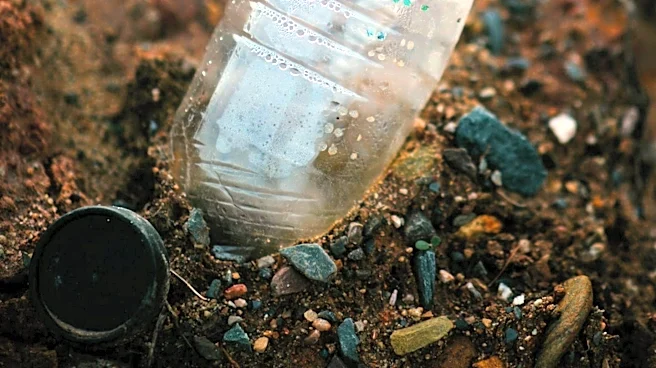
India is a proactive participant in the UN Environment Assembly’s negotiations for a legally binding treaty on plastic pollution, with a target completion date by the end of 2024. This global commitment aligns with India's domestic multi-pronged strategy
to combat plastic waste, which includes stringent regulations, technological innovation, and public awareness campaigns. The country generates over 3.5 million tonnes of plastic waste annually, according to the Central Pollution Control Board (CPCB). India's approach emphasizes the principle of common but differentiated responsibilities, advocating for financial and technical support for developing nations in these international discussions. The Intergovernmental Negotiating Committee (INC) sessions have seen India push for flexibility in implementation timelines while maintaining its ambition to ban single-use plastics. Domestically, India has implemented Plastic Waste Management Rules (2016, amended 2021, 2022, 2024) that mandate the phase-out of single-use plastics and enforce Extended Producer Responsibility (EPR). Producers, importers, and brand owners (PIBOs) are required to meet recycling targets through a centralized online portal managed by the CPCB. Additionally, India is fostering circular economy solutions through Plastic Parks and recycling clusters, which support waste-to-energy initiatives and biodegradable alternatives.
Why It's Important?
India's active role in the UN plastics treaty negotiations is significant for global environmental policy and could set precedents for other developing nations. Its emphasis on common but differentiated responsibilities highlights the varying capacities and historical contributions to plastic pollution among countries, potentially influencing the treaty's equity and feasibility. Domestically, India's comprehensive strategy, including EPR and single-use plastic bans, demonstrates a commitment to tackling plastic waste at multiple levels. The success of these initiatives could provide a scalable model for other nations facing similar challenges. The development of Plastic Parks and recycling clusters not only addresses waste management but also promotes economic opportunities in the circular economy, fostering innovation and job creation. The push for minimum recycled content in plastic packaging and a credit mechanism for surplus EPR certificates could drive significant changes in manufacturing practices and supply chains, encouraging greater sustainability in the plastics industry. This integrated approach underscores the complex interplay between environmental protection, economic development, and international cooperation in addressing a global crisis.
What's Next?
The UN Environment Assembly's legally binding treaty on plastic pollution is targeted for completion by the end of 2024. India will continue to participate in the ongoing Intergovernmental Negotiating Committee (INC) sessions, advocating for its positions on implementation timelines and support for developing nations. Domestically, the Plastic Waste Management Rules will see further enforcement and adaptation, with the 2024 amendment mandating minimum recycled content in plastic packaging (30% for rigid, 10% for flexible by 2025-26) and introducing a credit mechanism for surplus EPR certificates. The CPCB will continue to manage the centralized online portal for PIBOs to meet recycling targets. The Plastic Parks and recycling clusters are expected to expand, fostering more circular economy solutions. Additionally, consumer awareness campaigns like 'Tide Turners' and eco-labeling initiatives will continue to drive public participation and behavioral change. The integration of plastic waste management into urban sanitation through the Swachh Bharat Mission 2.0 will also progress, aiming for 100% scientific waste processing and the remediation of legacy dumpsites by 2025-26.
Beyond the Headlines
India's engagement in the global plastics treaty and its domestic policies reflect a broader shift towards recognizing plastic pollution as a critical environmental and public health issue. The principle of common but differentiated responsibilities, championed by India, could reshape international environmental law by acknowledging historical inequalities and varying national capacities. This approach could lead to more equitable burden-sharing and resource allocation in global environmental agreements. The focus on Extended Producer Responsibility (EPR) signifies a move towards holding manufacturers accountable for the entire lifecycle of their products, potentially transforming industrial design and waste management practices worldwide. The promotion of circular economy solutions, such as waste-to-energy and biodegradable alternatives, highlights a systemic change in how societies view and manage resources, moving away from a linear 'take-make-dispose' model. Furthermore, the integration of informal waste pickers into formal waste management systems, as seen in India's Swachh Bharat Mission, addresses social equity issues and recognizes the vital role of these communities in recycling efforts. This holistic approach, combining international diplomacy, national regulation, technological innovation, and social inclusion, could serve as a blueprint for addressing other complex global environmental challenges.