




What's Happening?
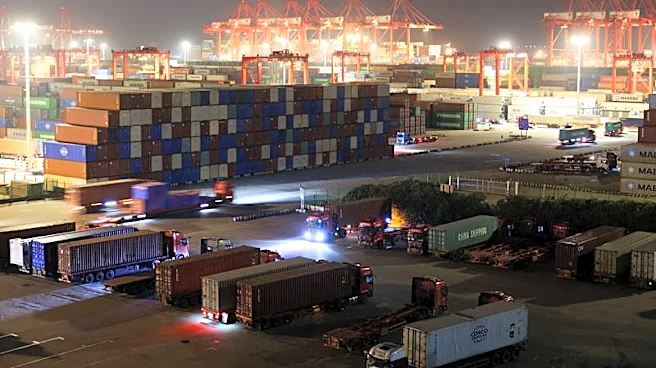
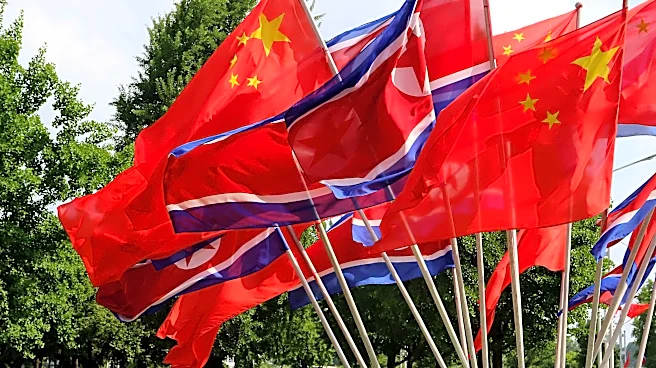
The upcoming World Radiocommunication Conference 2027 (WRC-27) in Shanghai is set to become a pivotal arena for U.S.-China competition in space. The conference will address critical issues related to space and satellite communications, with about 80%
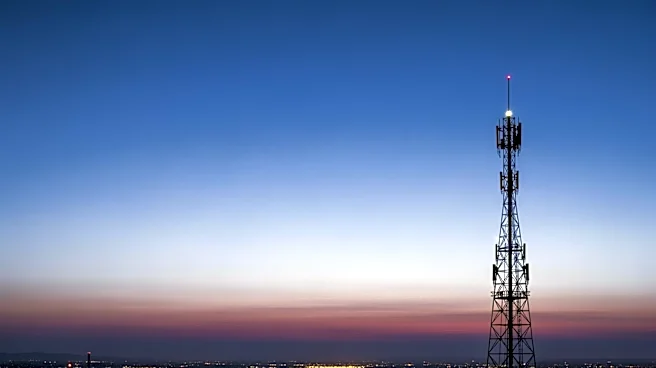
of the agenda focused on these topics. The U.S. currently holds an advantage in non-geostationary orbit (NGSO) satellite constellations, primarily due to Starlink's extensive network. However, China is rapidly advancing its capabilities with its national champions, Guowang and Qianfan. Key issues at the conference include spectrum allocations for direct-to-device transmissions, new spectrum allocations for space communications, and regulations on 'unauthorized' services by NGSO systems. The U.S. Federal Communications Commission (FCC) is leading efforts to update regulatory frameworks to enhance spectrum efficiency and support new technologies.
Why It's Important?
The outcomes of WRC-27 will significantly impact the U.S.'s ability to maintain its leadership in space technology and communications. The conference's decisions on spectrum allocations and regulatory frameworks will influence the global balance of power in space, affecting national security and political influence. The U.S. aims to promote its regulatory approaches internationally, which could bridge the digital divide and enhance connectivity in underserved areas. Failure to lead in setting these rules could allow other nations, particularly China, to establish regulations that may disadvantage U.S. interests and hinder the growth of American NGSO constellations.
What's Next?
In preparation for WRC-27, the U.S. government and industry stakeholders must collaborate to finalize data-driven studies and positions. The FCC is expected to accelerate its regulatory efforts, particularly concerning electronic power flux density (EPFD) levels. The State Department, alongside the FCC, should engage in a global diplomatic strategy to promote U.S. approaches and coordinate with international partners. Hosting an international spectrum summit in the U.S. could facilitate this coordination. The strategic engagement and leadership at WRC-27 are crucial to ensuring that the U.S. remains at the forefront of space technology and communications.