





What's Happening?
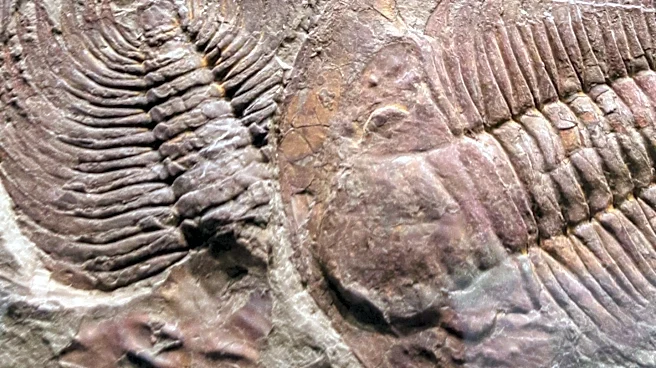
The Cambrian period, which occurred approximately 541 to 540 million years ago, is recognized for a rapid and extensive diversification of life forms, an event commonly referred to as the Cambrian Explosion. This relatively brief period, lasting between
20 to 25 million years, saw the appearance of most major animal phyla in the fossil record. This sudden emergence of diverse life forms presents a significant scientific puzzle, as evidence suggests that the complexity and variety of multi-cellular life had already begun to increase well before the Cambrian period, specifically during the Neoproterozoic and Mesoproterozoic periods. The Cambrian Explosion is characterized by the emergence of numerous new types of animal life, including various microfaunal groups, and remains an area of ongoing research and limited understanding despite extensive study.
Why It's Important?
The Cambrian Explosion is a pivotal event in the history of life on Earth, fundamentally reshaping our understanding of evolutionary processes. Its importance lies in the rapid appearance of complex animal body plans, which laid the groundwork for much of the biodiversity we see today. The puzzle surrounding this event challenges conventional views of gradual evolution, suggesting periods of accelerated biological innovation. Understanding the mechanisms behind this explosion could offer insights into how new life forms arise and adapt, potentially informing fields from astrobiology to biomedical research. The unresolved questions about the Cambrian period highlight gaps in our knowledge of early Earth ecosystems and the conditions that foster rapid evolutionary change, impacting how scientists model and interpret the development of life.
What's Next?
Future research will likely focus on uncovering more fossil evidence from the Neoproterozoic and Mesoproterozoic periods to better understand the precursors to the Cambrian Explosion. Advances in paleontological techniques and molecular biology may help to clarify the genetic and environmental factors that contributed to this rapid diversification. Scientists will continue to analyze existing fossil records with new methodologies, such as advanced imaging and chemical analysis, to gain deeper insights into the morphology and ecological roles of early Cambrian organisms. The ongoing investigation aims to resolve the 'baffling puzzle' of how such a significant increase in life's complexity and diversity occurred in a relatively short geological timeframe, potentially leading to new theories about evolutionary innovation.
Beyond the Headlines
The Cambrian Explosion's profound implications extend beyond paleontology, touching upon fundamental questions about the nature of life and evolution. The concept of a 'burst' of life challenges the notion of purely gradualistic evolution, suggesting that evolutionary trajectories can be punctuated by periods of intense innovation. This has philosophical implications for how we perceive the origins of complexity and the role of environmental pressures in shaping biodiversity. Furthermore, the study of Cambrian life forms provides a unique window into the earliest stages of animal development, offering clues about the genetic toolkits that underpin all animal life. The enduring mystery of the Cambrian Explosion underscores the vastness of unexplored scientific territory and the potential for revolutionary discoveries that could redefine our understanding of life's history.