






What's Happening?
The U.S. trade deficit significantly increased in July, reaching its highest level in over a year. Data released by the U.S. Census Bureau and the U.S. Bureau of Economic Analysis showed the goods and services deficit grew by $17.4 billion month-over-month,
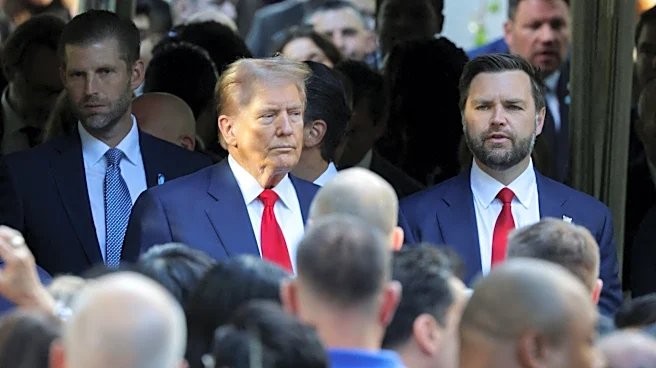
from $71.2 billion in June to $88.6 billion in July. This surge was driven by a $6.6 billion decrease in U.S. exports, primarily in crude oil and gold, and a $10.8 billion increase in imports, largely due to technology components like semiconductors and computer parts, likely to support the artificial intelligence sector. Despite this monthly increase, White House senior deputy press secretary Kush Desai stated that year-to-date figures indicate a 29.6 percent decrease in the goods and services deficit compared to the same period in 2025, with exports growing by 12 percent and imports by 1.9 percent. President Trump reacted to the July figures with an all-caps Truth Social post, threatening to halt trade with countries with which the U.S. has a deficit unless the Federal Reserve lowers interest rates.
Why It's Important?
The growing trade deficit and President Trump's response highlight ongoing tensions in U.S. trade policy and its intersection with monetary policy. The increase in imports of technology components underscores the U.S.'s reliance on foreign supply chains for critical sectors like artificial intelligence, which has significant implications for national security and economic competitiveness. President Trump's threat to halt trade with deficit countries, coupled with his demand for lower interest rates from the Federal Reserve, signals a potential escalation of protectionist measures and a challenge to the Federal Reserve's independence. Such actions could disrupt global trade relationships, impact U.S. businesses reliant on international trade, and potentially lead to higher consumer prices. The historical evidence cited in the source suggests that the administration's tariff regime has not consistently reduced the trade deficit, raising questions about the effectiveness of such policies and their long-term economic consequences for the U.S.
What's Next?
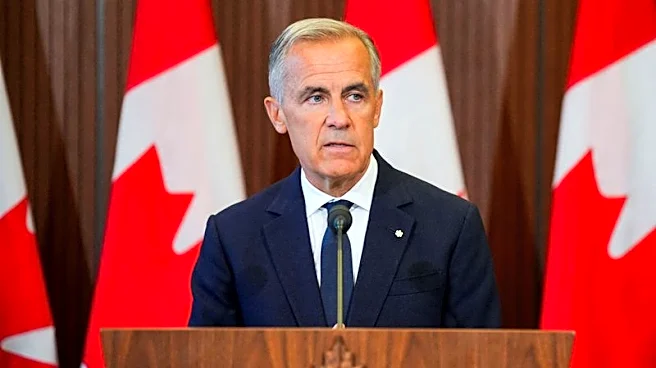
The immediate future could see increased pressure on the Federal Reserve to adjust interest rates, potentially leading to a standoff between the executive branch and the independent central bank. If President Trump follows through on his threat to halt trade with deficit countries, it could trigger retaliatory measures from trading partners, further destabilizing global trade. The ongoing trade war with Canada, which is set to see new Canadian tariffs on U.S. imports, indicates that trade tensions are likely to persist and potentially intensify. Businesses and consumers in the U.S. may face increased uncertainty regarding import costs and availability of goods. The administration's focus on reindustrialization, as indicated by the high share of capital goods imports, suggests a continued push for domestic manufacturing, but the rising trade deficit in July complicates this narrative. The situation will likely continue to evolve based on economic data, Federal Reserve decisions, and diplomatic engagements with trading partners.
Beyond the Headlines
The debate surrounding the trade deficit and President Trump's proposed solutions touches upon fundamental questions about economic sovereignty, the role of tariffs, and the independence of monetary policy. The argument that tariffs would act as an antidote to global imbalances has been a cornerstone of the administration's trade agenda, yet the July figures challenge this premise. The President's assertion of an 'absolute right' to halt trade, citing a Supreme Court decision, raises significant constitutional and legal questions regarding the balance of power in trade policy. Furthermore, the intertwining of trade policy with demands for interest rate adjustments from the Federal Reserve blurs the lines between fiscal and monetary policy, potentially undermining the stability and predictability of the U.S. economic framework. This approach could have long-term implications for international economic relations, potentially leading to a more fragmented global trading system and increased geopolitical tensions.