








What's Happening?
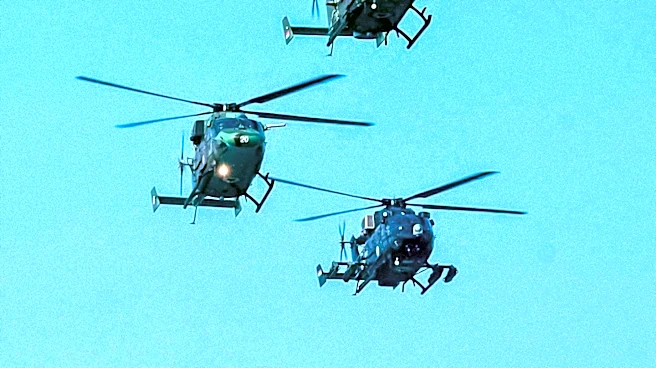
India and Myanmar conducted their inaugural bilateral tri-services Humanitarian Assistance and Disaster Relief (HADR) exercise, named 'RAHAT MITRA,' in Chennai from November 5 to 6, 2026. This two-day drill involved over 300 personnel from the Army, Navy,
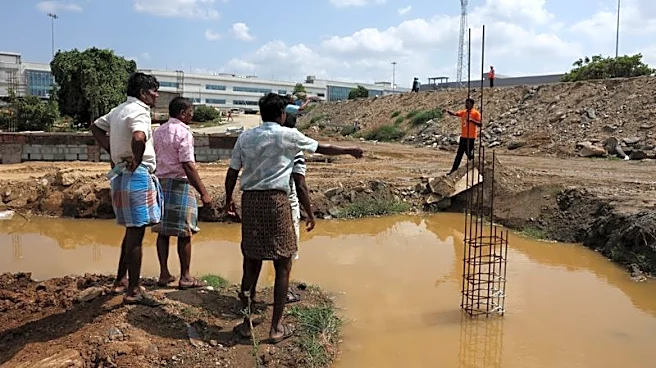
and Air Force of both countries, with the Indian Navy serving as the coordinating service. The exercise focused on professional exchanges, sharing field experience, and enhancing interoperability in disaster response. Activities included rescue drills, dewatering of flooded areas, and bridge laying to restore road links, demonstrating a comprehensive approach to disaster management. The theme for the exercise was 'Together for Humanity, Stronger through Partnership,' aligning with India's 'Neighbourhood First' policy and 'MAHASAGAR' vision.
Why It's Important?
The 'RAHAT MITRA' exercise is a significant step in strengthening bilateral defense cooperation between India and Myanmar, particularly in the critical area of HADR. For the U.S., fostering stability and disaster preparedness in the Indo-Pacific region is a key strategic interest. Enhanced HADR capabilities among regional partners can lead to more effective responses to natural disasters, reducing humanitarian crises and preventing potential destabilization. This exercise also supports India's growing role as a regional security provider and its 'Act East' policy, which seeks to deepen engagement with Southeast Asian nations. Improved interoperability between India and Myanmar's forces can contribute to a more resilient regional security architecture, indirectly benefiting U.S. efforts to promote peace and stability.
What's Next?
The success of the inaugural 'RAHAT MITRA' exercise may pave the way for future joint HADR drills and expanded defense cooperation between India and Myanmar. Such initiatives are likely to continue under India's 'Neighbourhood First' policy, which prioritizes engagement with neighboring countries. The experience gained from this exercise will inform future training and operational strategies, potentially leading to more sophisticated and integrated disaster response mechanisms. Additionally, the emphasis on professional exchanges and shared experiences could foster deeper trust and understanding between the two nations' armed forces, contributing to broader regional security dialogues and collaborative efforts.
Beyond the Headlines
Beyond the immediate benefits of disaster preparedness, 'RAHAT MITRA' signifies a deeper geopolitical alignment and strategic intent. India's proactive engagement with Myanmar through such exercises underscores its commitment to regional leadership and its efforts to counter the influence of other major powers in its neighborhood. For the U.S., understanding these evolving regional dynamics is crucial for its own foreign policy and security strategies in the Indo-Pacific. The exercise also highlights the increasing recognition of HADR as a critical component of national security and international diplomacy, demonstrating how humanitarian efforts can serve as a foundation for broader strategic partnerships and regional stability.