




What's Happening?
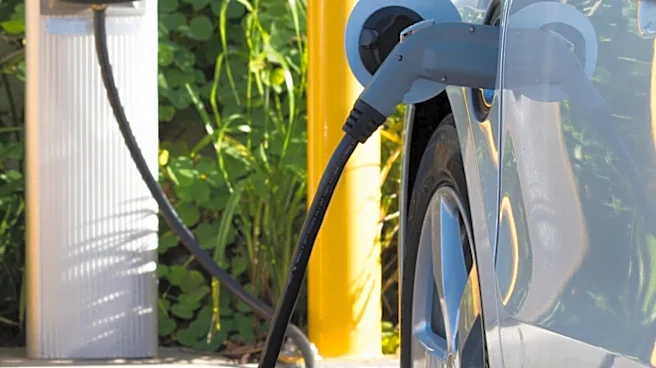
Federal actions, including staff cuts and legislative proposals, have significantly disrupted the coordinated national rollout of electric vehicle (EV) charging infrastructure, according to a Congressional Research Service (CRS) report released in June.
The report detailed issues affecting the National Electric Vehicle Infrastructure (NEVI) program and the Charging and Fueling Infrastructure (CFI) grant program. The 119th Congress is currently considering multiple bills that could transfer, rescind, or entirely terminate NEVI and CFI. Furthermore, the administration's fiscal 2027 budget request proposed canceling $4.2 billion in remaining unobligated funds from both programs. Legal challenges are also underway, including *State of California et al. v. U.S. DOT* concerning a CFI pause, and *State of Illinois et al. v. Russell Vought et al.* challenging OMB-directed CFI grant cancellations.
Why It's Important?
The disruption to NEVI and CFI programs is critical for the future of electric vehicle adoption and the broader U.S. transition to sustainable transportation. These programs are designed to build a robust national EV charging network, which is essential for alleviating range anxiety and encouraging consumers to switch to EVs. Delays or cancellations in funding and implementation could significantly slow down the deployment of charging stations, particularly in rural, low-income, and underserved communities that CFI prioritizes. This directly impacts the U.S.'s ability to meet its climate goals, reduce reliance on fossil fuels, and foster economic growth in the EV sector. The uncertainty also affects private sector investment and state-level planning for EV infrastructure, creating a less predictable environment for a nascent but crucial industry.
What's Next?
The immediate future will likely see continued legislative debate in the 119th Congress regarding the fate of NEVI and CFI programs. The proposed cancellation of $4.2 billion in funds in the fiscal 2027 budget request will face scrutiny and potential opposition from EV advocates and some lawmakers. The ongoing legal challenges, *State of California et al. v. U.S. DOT* and *State of Illinois et al. v. Russell Vought et al.*, will proceed, and their outcomes could significantly influence the programs' implementation and funding. Stakeholders, including EV manufacturers, charging infrastructure companies, environmental groups, and state governments, will likely intensify their lobbying efforts to preserve or modify these programs. The outcome will determine the pace and scope of EV charging infrastructure development across the nation.
Beyond the Headlines
The challenges facing NEVI and CFI programs highlight a broader tension in U.S. policy regarding infrastructure investment and climate initiatives. The legislative and administrative actions reflect differing priorities and approaches to federal spending and environmental policy. This situation could signal a potential shift in federal commitment to EV infrastructure, which might force states and private entities to shoulder a larger burden, potentially leading to uneven development across the country. It also raises questions about the long-term stability of federal programs designed to address national challenges like climate change and energy independence. The legal battles underscore the increasing role of litigation in shaping policy implementation when there are disagreements between federal and state governments or between different branches of the federal government.