





What's Happening?
The U.S. Senate has unanimously passed the Weather Research and Forecasting Innovation Reauthorization Act of 2026, also known as the Weather Act (S. 3923). This comprehensive bill aims to modernize the nation's weather forecasting system and reauthorize
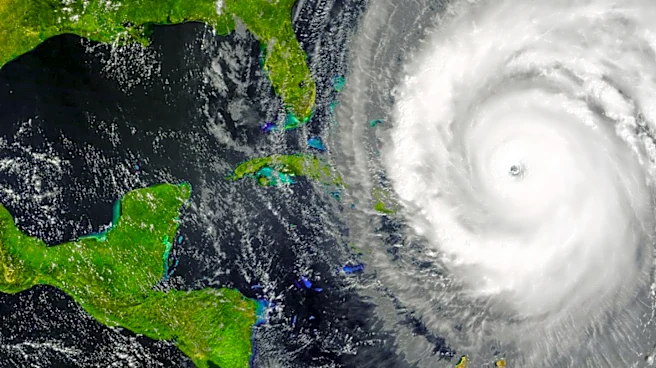
various programs under the National Oceanic and Atmospheric Administration (NOAA). Key provisions include establishing the Hurricane Forecast Improvement Program as a long-term initiative to enhance predictions of rapid hurricane intensification, storm tracks, and storm surge. The legislation also directs NOAA to design and deploy the next generation of weather radar by 2037, address current radar coverage gaps, and upgrade NOAA Weather Radio equipment, expanding its coverage in rural areas. Additionally, the bill reauthorizes the national Harmful Algal Bloom and Hypoxia Program and mandates a new interagency effort on extreme heat. Introduced by Commerce Committee Chairman Ted Cruz, R-Texas, and Ranking Member Maria Cantwell, D-Wash., the bill now moves to the House of Representatives for consideration, with anticipation of it being sent to the president before the 119th Congress concludes.
Why It's Important?
This legislation is crucial for enhancing public safety and economic stability across the U.S., particularly in regions prone to severe weather events like Florida and Texas. Improved hurricane forecasting, especially regarding rapid intensification and storm surge, can provide residents with more time to prepare and evacuate, potentially saving lives and reducing property damage. The modernization of the Doppler radar network and NOAA Weather Radio will ensure more accurate and timely warnings reach a broader population, including those in remote areas. For the property insurance industry, better forecasts directly feed into catastrophe models, allowing insurers to more accurately assess risk and price coverage, which could lead to more stable insurance markets. The reauthorization of programs addressing harmful algal blooms and extreme heat also tackles significant public health and environmental challenges, impacting coastal communities and vulnerable populations nationwide.
What's Next?
The Weather Act now proceeds to the House of Representatives for consideration. Given that the Senate passage reflects a bicameral agreement, it is anticipated that the House will take up the bill and send it to the president for signature before the 119th Congress adjourns in early January. If the House fails to act within this timeframe, the legislation would need to be reintroduced in the new Congress. Upon enactment, NOAA will be tasked with implementing the various provisions, including conducting an assessment of NOAA Weather Radio within a year, designing the next-generation radar system, and integrating social, behavioral, risk, and communication science into hurricane modeling. The Congressional Budget Office estimates the bill's implementation cost at approximately $2.9 billion over 2027 through 2031, with actual funding still subject to appropriation.
Beyond the Headlines
The unanimous passage of the Weather Act underscores a bipartisan recognition of the escalating threats posed by severe weather and climate-related events. This legislative effort reflects a broader national strategy to leverage scientific advancements and technological innovation to mitigate the impacts of natural disasters. Beyond immediate forecasting improvements, the bill's emphasis on incorporating social and behavioral science into risk communication highlights a growing understanding that effective disaster preparedness involves not just predicting events but also ensuring the public understands and acts on warnings. The long-term investment in infrastructure like next-generation radar and expanded weather radio coverage signals a commitment to building resilience against future weather challenges, potentially setting a precedent for how the U.S. approaches climate adaptation and disaster management in the coming decades. The focus on prohibiting equipment purchases from foreign countries of concern also reflects national security considerations within critical infrastructure development.