
What's Happening?
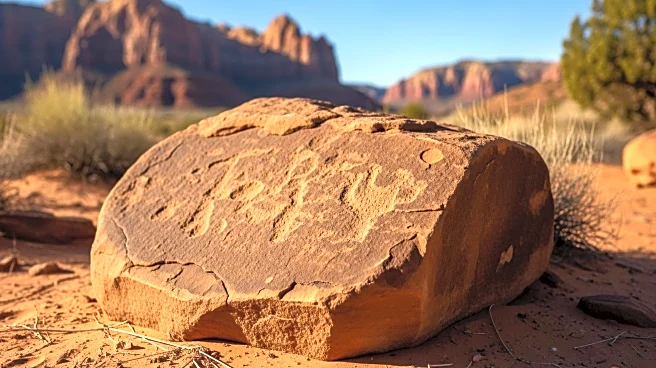
A significant cultural artifact, a large rock bearing petroglyphs created over 1,000 years ago by the ancestors of the Northwestern Band of the Shoshone Nation, has been returned to its original location
in northern Utah. The Church of Jesus Christ of Latter-day Saints facilitated the repatriation after a 14-year effort, which involved removing the rock from a concrete slab in front of a church meetinghouse in Tremonton, Utah. The rock was carefully cleaned and restored before being airlifted back to its original site. This effort was a collaboration between the church, the tribe, and the state, aiming to restore a piece of Shoshone heritage.
Why It's Important?
The return of the sacred rock is a significant step in acknowledging and respecting the cultural heritage of the Shoshone people. It represents a broader movement towards the repatriation of indigenous artifacts and the recognition of historical injustices faced by Native American tribes. This act of repatriation helps in healing and rebuilding the fractured history of the Shoshone Nation, providing a sense of cultural restoration and continuity. It also highlights the ethical responsibilities of institutions in preserving and returning cultural artifacts to their rightful owners.
What's Next?
The successful repatriation of the rock may encourage further efforts to return other cultural artifacts to indigenous communities. It sets a precedent for similar actions by other institutions holding indigenous artifacts. The Church of Jesus Christ of Latter-day Saints has expressed a commitment to continue working with indigenous groups to ensure the preservation and return of sacred items. This could lead to increased collaboration between religious institutions, state agencies, and Native American tribes in cultural preservation efforts.
Beyond the Headlines
This event underscores the importance of cultural sensitivity and the need for institutions to engage with indigenous communities in meaningful ways. It raises awareness about the historical displacement of cultural artifacts and the ongoing efforts to rectify these actions. The repatriation of the rock also serves as a reminder of the spiritual and cultural significance of such artifacts to indigenous peoples, emphasizing the need for respectful and informed handling of cultural heritage.