


What's Happening?
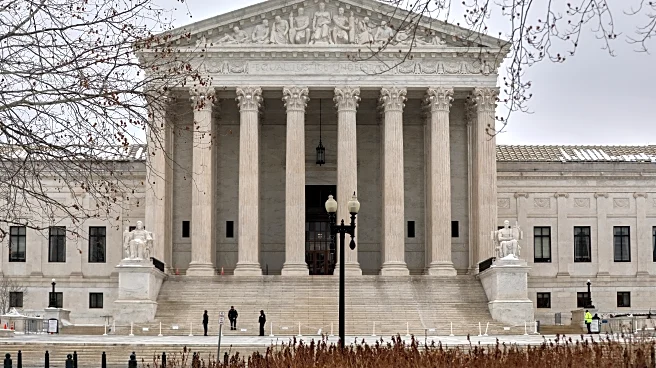
The United States Supreme Court is currently hearing oral arguments regarding the constitutional right to citizenship for children born in the U.S. President Trump has made history as the first sitting president to attend oral arguments in the chamber,
following his executive order aimed at ending automatic citizenship for children born to undocumented immigrants or temporary visa holders. Opponents argue that this order contradicts the 14th Amendment of the U.S. Constitution, which grants citizenship to all persons born or naturalized in the U.S. Proponents believe the order could help address national security and public safety threats. The case has sparked significant debate over the interpretation of birthright citizenship, a principle not universally adopted worldwide.
Why It's Important?
The outcome of this Supreme Court case could have profound implications for U.S. immigration policy and the legal status of millions of individuals. If President Trump's order is upheld, it could lead to a significant increase in the number of undocumented individuals in the U.S., potentially rising by millions over the next few decades. This shift could affect various sectors, including labor markets, social services, and community dynamics. The case also highlights the ongoing debate over immigration and citizenship laws, reflecting broader global trends and challenges in managing migration and national identity.
What's Next?
Should the Supreme Court uphold President Trump's order, the legal landscape for citizenship in the U.S. will change dramatically. This could lead to legislative efforts to address the status of children born to undocumented immigrants and temporary visa holders. Additionally, the decision may prompt further legal challenges and advocacy from immigrant rights groups. The ruling could also influence international perceptions of U.S. immigration policy and its alignment with global norms.
Beyond the Headlines
The case raises ethical and legal questions about the balance between national security and individual rights. It also touches on historical issues related to citizenship and the inclusion of marginalized groups, such as freed slaves, in the nation-state. The decision could set a precedent for how citizenship is defined and granted, potentially influencing other countries' policies and international human rights standards.