






What's Happening?
President Donald Trump announced that the United States will extend its ceasefire with Iran following a request from Pakistan. This decision comes as Iran has not yet responded to the latest U.S. negotiating positions, and high-level diplomatic efforts
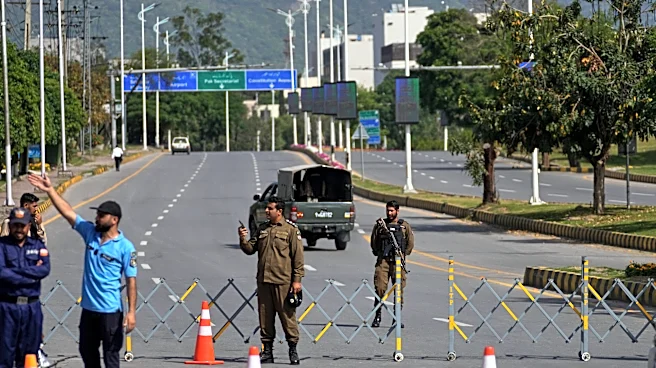
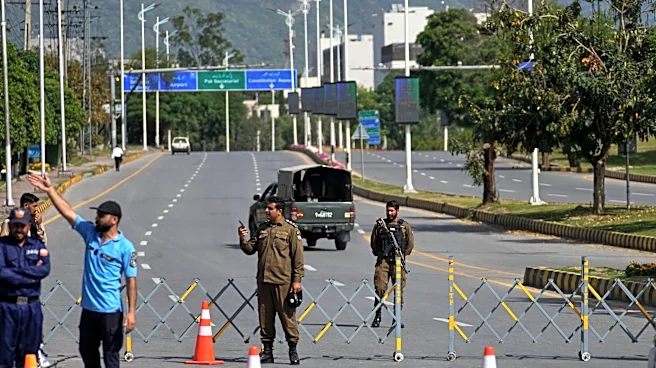
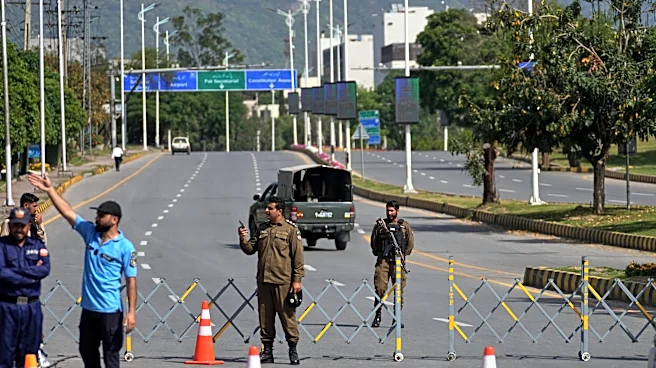
remain stalled. According to President Trump, Pakistan's military chief, Field Marshal Asim Munir, and Prime Minister Shehbaz Sharif urged the U.S. to delay further military action to allow Iranian leaders time to develop a unified proposal. Despite the extension, President Trump has instructed the U.S. military to maintain its blockade of Iranian ports and to stay prepared for potential renewed hostilities if diplomatic talks fail. The White House has also paused Vice President JD Vance's planned visit to Islamabad, which was intended to encourage progress in nuclear agreement negotiations with Iran.
Why It's Important?
The extension of the ceasefire is significant as it highlights ongoing tensions between the U.S. and Iran, with potential implications for regional stability and international relations. The decision to maintain a military blockade while extending the ceasefire underscores the delicate balance the U.S. is trying to maintain between diplomacy and military readiness. This move could impact global oil markets and international diplomatic efforts, as Iran's response to the U.S. proposals remains uncertain. The involvement of Pakistan as a mediator indicates the complexity of geopolitical alliances and the potential for broader regional involvement in the U.S.-Iran conflict.
What's Next?
The next steps depend largely on Iran's response to the U.S. proposals. If Iran presents a unified proposal, it could lead to renewed diplomatic talks and potentially ease tensions. However, if Iran remains unresponsive, the U.S. may face pressure to resume military actions, which could escalate the situation. The international community, including allies and regional powers, will likely monitor developments closely, as any change in the U.S.-Iran relationship could have far-reaching consequences for global security and economic stability.