


What's Happening?
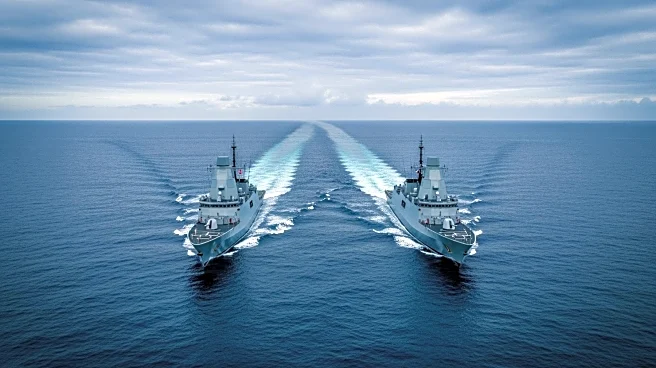
Kim Yo Jong, the influential sister of North Korean leader Kim Jong Un, has issued a statement condemning the United States and South Korea for their joint military exercises, which she claims threaten regional stability. The exercises, known as Freedom
Shield, are part of annual drills involving thousands of troops and are designed to enhance the allies' operational capabilities. North Korea views these drills as invasion rehearsals and has historically used them as justification for its own military activities. The criticism comes at a time when North Korea is strengthening its ties with Russia and China, positioning itself as part of a new Cold War dynamic against the U.S. and its allies. Additionally, train services between Pyongyang and Beijing are expected to resume, potentially increasing economic interactions between the two countries.
Why It's Important?
This development underscores the persistent tensions on the Korean Peninsula and the broader implications for international security. North Korea's alignment with Russia and China, coupled with its criticism of U.S.-South Korea military activities, reflects a strategic shift that could influence global geopolitical dynamics. The resumption of train services between North Korea and China may facilitate economic recovery and diplomatic engagement, impacting regional trade and North Korea's post-pandemic economy. The situation also highlights the challenges faced by the U.S. and its allies in addressing North Korea's nuclear ambitions and maintaining regional stability.
What's Next?
The international community will be closely watching for any military responses from North Korea, as well as the potential impact of resumed train services on economic and diplomatic relations between North Korea and China. The U.S. and South Korea are likely to continue their military exercises, which could lead to further provocations from North Korea. The evolving alliances and geopolitical tensions will require careful diplomatic navigation to prevent escalation and promote stability in the region.