



What's Happening?
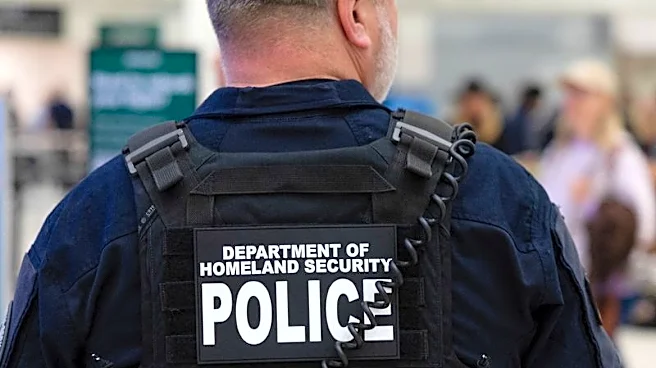
President Trump has directed the Department of Homeland Security (DHS) to ensure payment for all its employees despite an ongoing shutdown that has lasted nearly two months. The shutdown resulted from a congressional impasse over immigration enforcement
policy, leaving thousands of DHS employees without paychecks. In a memo, President Trump instructed DHS Secretary Markwayne Mullin and Office of Management and Budget Director Russell Vought to identify funds that can be used to pay the employees, emphasizing the need to maintain national security and emergency readiness. The memo highlights that over 35,000 DHS employees, including civilian Coast Guard staff and personnel at the Federal Emergency Management Agency and Cybersecurity and Information Security Agency, have not been paid. The shutdown began in mid-February following a dispute over immigration policy, particularly funding for Immigration and Customs Enforcement (ICE) and Customs and Border Protection (CBP).
Why It's Important?
The decision to pay DHS employees amid the shutdown underscores the critical role of the agency in maintaining national security and emergency preparedness. The shutdown has raised concerns about the vulnerability of the U.S. to security threats and the ability to respond to emergencies. By ensuring that DHS employees are paid, the administration aims to mitigate these risks and maintain operational readiness. The move also highlights the ongoing political struggle over immigration policy, with Democrats opposing funding for ICE and CBP without policy changes. The impasse has significant implications for the functioning of DHS and the broader immigration enforcement framework in the U.S.
What's Next?
A potential resolution to the shutdown is emerging as Senate Democrats and Republicans have approved a bill to fund most of DHS while excluding ICE and parts of CBP. This plan allows the majority of the agency to reopen, with GOP leaders indicating they plan to pass the funding through the Senate's reconciliation process, which requires a simple majority. The House has yet to act on the Senate's bill, and the outcome will determine the future of DHS operations and the broader immigration policy debate.