







What's Happening?
The Supreme Court's recent decision in the case of Louisiana v. Callais has opened the door for states to redraw congressional maps in ways that could dilute the political power of minority voters. This ruling is seen as a significant blow to the Voting
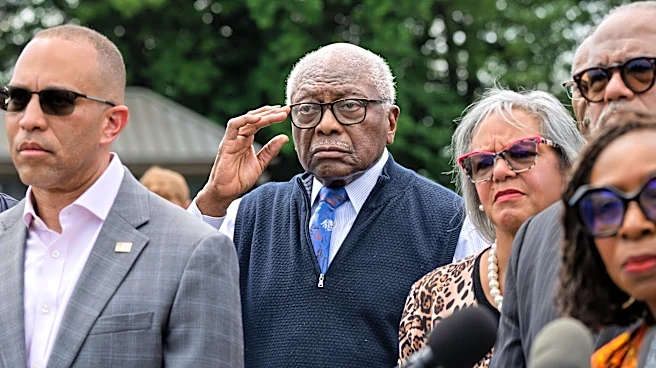
Rights Act, which has historically protected minority representation in Congress. The decision could lead to the loss of seats for as many as 19 Black members of Congress, particularly affecting Democrats and members of the Congressional Black Caucus. The ruling follows a series of Supreme Court decisions that have progressively weakened the Voting Rights Act, including the removal of federal oversight for states with histories of racial discrimination and making it harder to challenge racially discriminatory state laws.
Why It's Important?
This development is significant as it threatens to reverse decades of progress in minority representation in U.S. politics. The potential loss of Black congressional seats could weaken the influence of the Congressional Black Caucus, an important voice for African American issues on Capitol Hill. The ruling also highlights ongoing challenges in ensuring fair representation for minority voters, as states may now have more leeway to engage in gerrymandering that favors certain political parties. This could lead to a Congress that is less representative of the country's diverse population, impacting legislation on issues that disproportionately affect minority communities.
What's Next?
In response to the ruling, the Congressional Black Caucus is focusing on voter registration and mobilization efforts ahead of the midterm elections. They are also considering legislative maneuvers to protest the decision and are planning to push for the revival of the John R. Lewis Voting Rights Advancement Act if Democrats regain control of Congress and the White House. Additionally, discussions are underway about potential reforms to the Supreme Court, such as expanding the number of justices or implementing term limits, to address concerns about its recent decisions.
Beyond the Headlines
The Supreme Court's decision reflects broader tensions in U.S. politics regarding race and representation. It raises ethical and legal questions about the balance between state autonomy in electoral matters and the protection of minority voting rights. The ruling could also influence future legal battles over gerrymandering and voting rights, setting precedents that may affect how electoral districts are drawn across the country. This situation underscores the ongoing struggle for civil rights and the importance of maintaining vigilance in protecting democratic principles.