


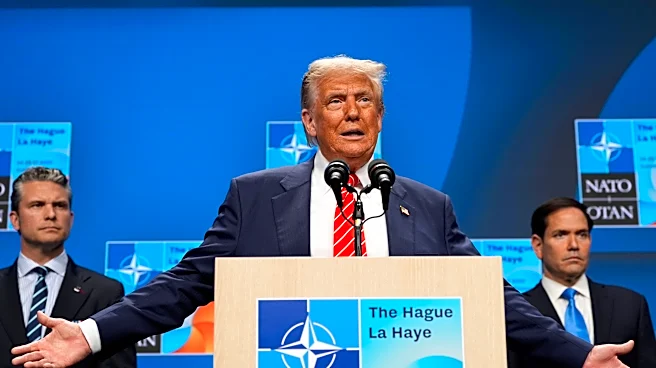


What's Happening?
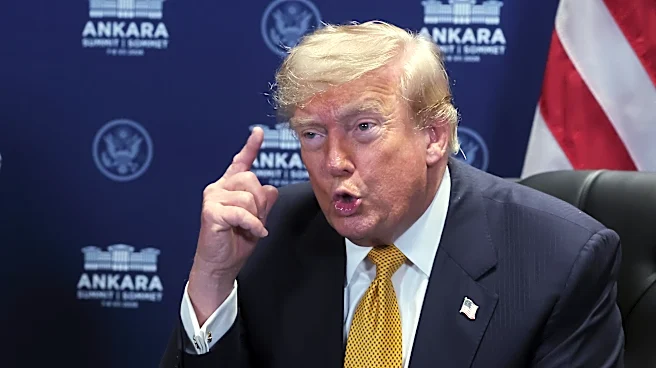
A recent internal survey reveals that only 43% of US adults believe NATO would honor its collective defense clause if the US were attacked, marking the lowest confidence level among the bloc's 32 members. This decline in confidence is attributed to President
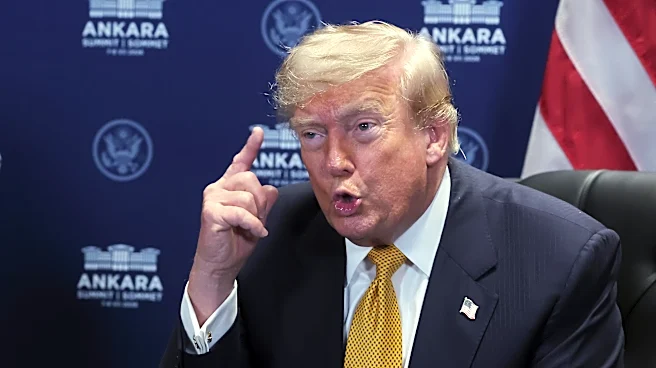
Donald Trump's repeated criticism of NATO, which he has described as a 'one-sided' relationship. Despite overall support for NATO remaining relatively strong, with 72% of respondents viewing the partnership as important, the survey indicates shifting attitudes towards Russia and China among member states. Favorable views of Russia and China have increased, while support for Ukraine has slightly decreased.
Why It's Important?
The decline in US public confidence in NATO is significant as it reflects broader geopolitical shifts and the impact of President Trump's rhetoric on international alliances. As the US plays a crucial role in NATO, changes in public opinion could influence future policy decisions and military commitments. The survey's findings highlight potential challenges for NATO in maintaining unity and addressing emerging threats. The shift in attitudes towards Russia and China also underscores the evolving geopolitical landscape and the need for strategic adjustments by NATO and its member states.
What's Next?
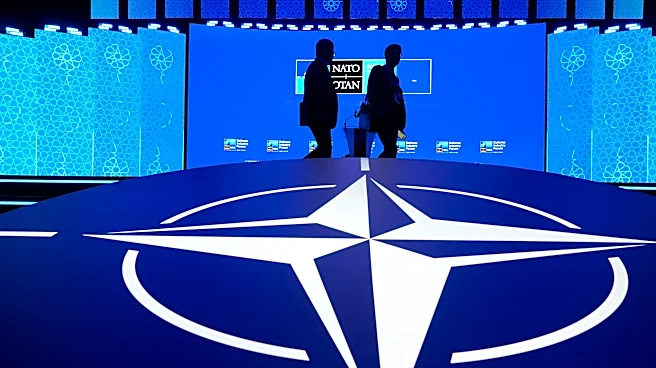
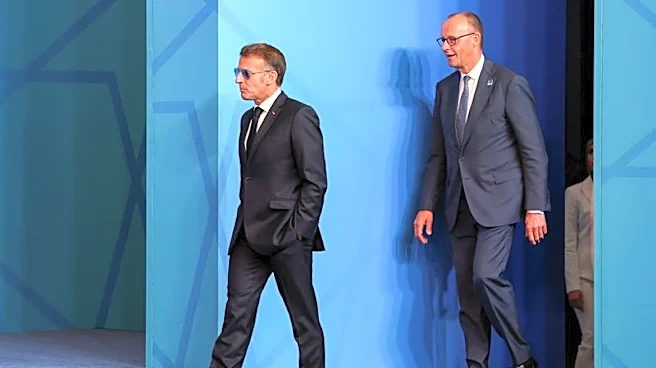
The upcoming NATO summit in Ankara will be a critical moment for addressing these concerns and reinforcing the alliance's commitments. The US may seek to renegotiate its role and contributions within NATO, potentially leading to changes in military deployments and funding. The outcome of these discussions could have far-reaching implications for transatlantic relations and global security. As public opinion continues to evolve, NATO will need to adapt its strategies to maintain cohesion and effectively address emerging challenges.