



What's Happening?
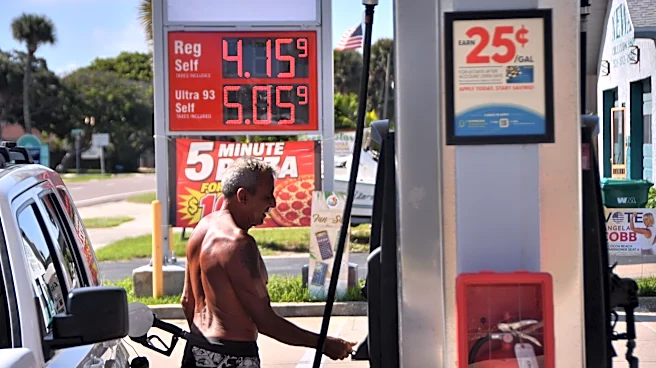
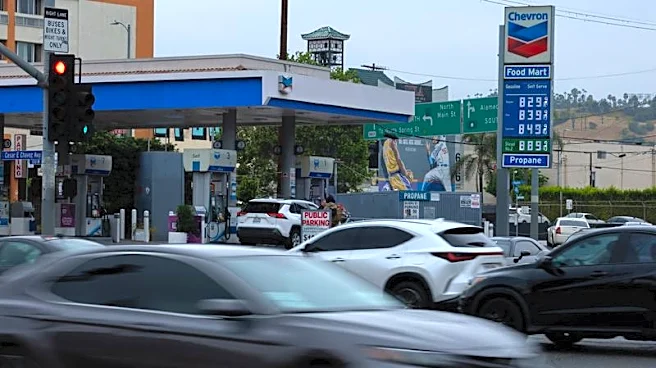
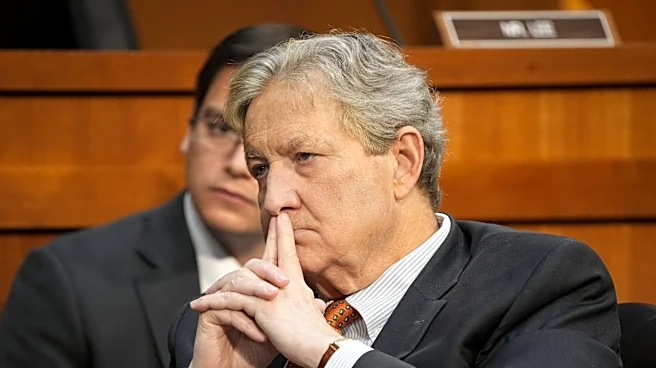
Senator Mike Rounds of South Dakota has indicated that Congress is exploring a temporary solution to address high gas prices. This proposal involves a potential temporary suspension of gas taxes, which would also apply to diesel. Senator Rounds emphasized
that for such a measure to be effective, cooperation would be necessary from both state governments and the White House. The discussion comes as consumers face financial strain due to elevated fuel costs, and with the harvest season approaching, there is an increased focus on finding relief for those impacted by these prices. The aim is to alleviate the burden on individuals and businesses by reducing the cost of fuel, even if for a limited period.
Why It's Important?
A temporary gas tax holiday could have significant economic implications for U.S. consumers and industries. For individuals, it would mean immediate relief at the pump, potentially freeing up household budgets for other necessities or savings. For industries heavily reliant on transportation, such as agriculture and logistics, a reduction in diesel costs could lower operational expenses, which might translate to more stable prices for goods and services. The agricultural sector, in particular, stands to benefit as the harvest season approaches, where fuel is a major input cost. However, the proposal also highlights the complex interplay between federal and state policies, as state-level cooperation is deemed crucial for its success. The potential loss of tax revenue, even temporarily, for both federal and state governments would need to be considered, as these funds typically support infrastructure projects and other public services.
What's Next?
The next steps involve continued discussions within Congress to refine the proposal for a temporary gas tax holiday. Senator Rounds' comments suggest that bipartisan and intergovernmental cooperation will be key to moving forward. This includes securing agreement from state governments, which would likely need to align their own tax policies with any federal initiative to maximize the impact. The White House's stance and willingness to collaborate will also be critical. As the harvest season draws nearer, pressure may mount to expedite a decision, given the direct impact on farmers and the broader food supply chain. Further details on the duration of the proposed holiday and the mechanisms for implementation are expected to emerge as legislative efforts progress.
Beyond the Headlines
Beyond the immediate financial relief, a temporary gas tax holiday could spark broader conversations about energy policy and government revenue streams. While offering short-term benefits, such measures can also raise questions about the long-term funding of infrastructure projects that are typically supported by gas taxes. It could also highlight the vulnerability of consumers and industries to fluctuating global energy prices and prompt discussions on strategies for greater energy independence or alternative fuel sources. The political implications are also noteworthy, as elected officials seek to demonstrate responsiveness to public concerns about the cost of living. The debate could also underscore the differing priorities between federal and state governments regarding fiscal policy and economic intervention.