
What's Happening?
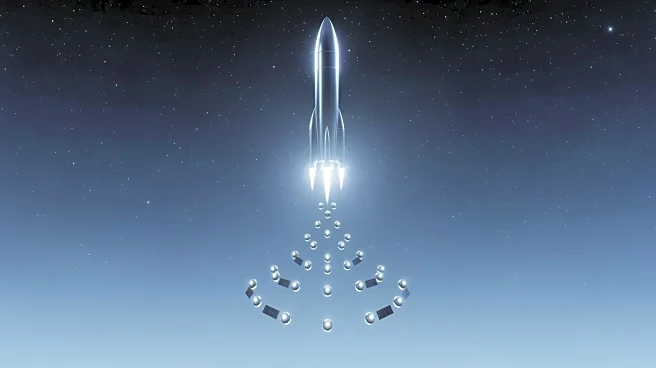
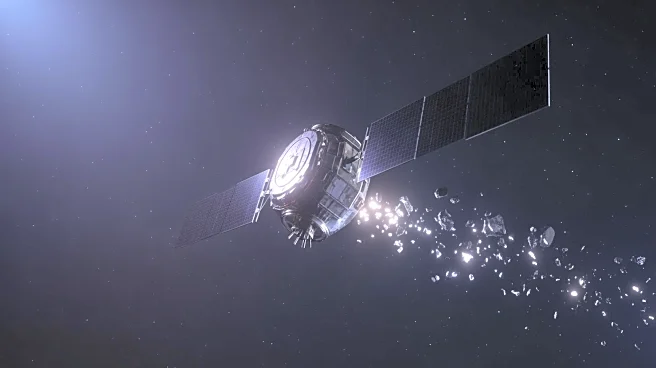
A Starlink satellite, identified as Starlink 35956, experienced an onboard anomaly resulting in the venting of its propellant and the release of debris. The incident occurred shortly after its launch on November
23, 2025, as part of the Starlink Group 11-30-13 mission. The satellite, now tumbling at an altitude of 418 km, is expected to reenter Earth's atmosphere and disintegrate within weeks. The event has led to the tracking of hundreds of debris objects, which have spread over 6,000 km along the orbital track. Starlink engineers are investigating the cause and deploying software updates to prevent similar occurrences.
Why It's Important?
The failure of the Starlink satellite and the resulting debris highlight the growing challenges of managing space traffic and debris in low Earth orbit. As the number of satellites increases, the risk of collisions and the creation of space debris also rise, posing threats to operational satellites and the International Space Station. This incident underscores the need for improved collision-avoidance technologies and international cooperation to ensure the sustainable use of space. The potential for cascading debris events, known as the Kessler Syndrome, could render certain orbits unusable, impacting satellite communications and other space-based services.
What's Next?
Starlink is actively working to address the anomaly and enhance the safety of its satellite operations. The company is deploying software updates to mitigate future risks. Meanwhile, space agencies and private companies are likely to intensify efforts to develop debris mitigation strategies and improve tracking capabilities. This incident may also prompt regulatory discussions on space traffic management and the responsibilities of satellite operators in preventing debris generation.