



What's Happening?
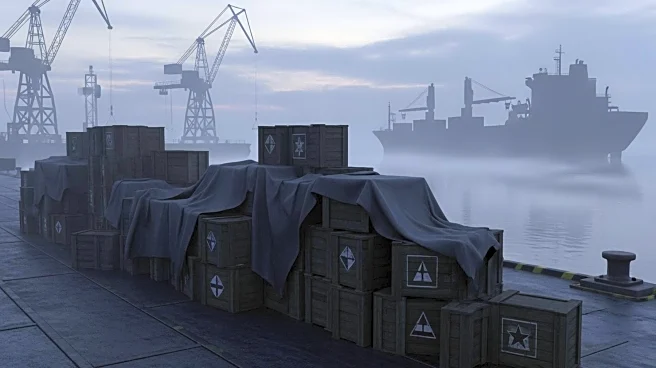
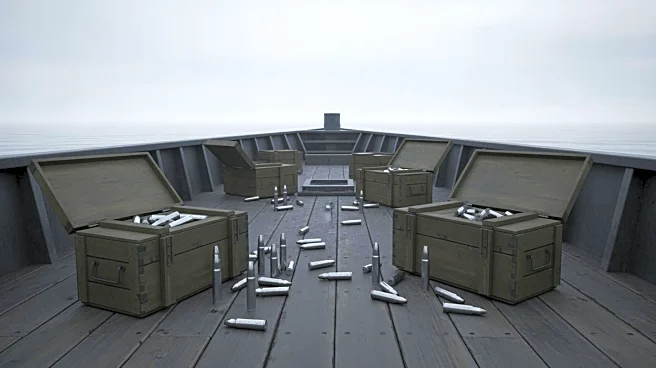
Recent analysis by the Open Source Centre (OSC) indicates a significant reduction in the volume of North Korean ammunition shipments to Russia. Since the commencement of these shipments in September 2023, four cargo ships have been identified as transporting
ammunition from North Korea to Russia. These ships, owned by MG-Flot and Sovfracht, have been involved in over 100 transits, moving artillery and rockets primarily to the Tikhoretsk ammunition depot in Krasnodar. However, only two shipments have been recorded in 2026, suggesting a decline in activity. Ukrainian Military Intelligence (HUR) attributes this decrease to the depletion of North Korean stockpiles, a theory supported by reports of poor-quality ammunition being shipped. The OSC report also highlights the use of deception techniques in shipping routes and the involvement of sanctioned vessels in these operations.
Why It's Important?
The decline in North Korean ammunition shipments to Russia could have significant implications for the ongoing conflict in Ukraine. If North Korean stockpiles are indeed depleted, Russia may face challenges in maintaining its artillery firepower, potentially impacting its military operations. This development could also influence the dynamics of international sanctions, as it underscores the challenges in enforcing restrictions on sanctioned entities. Additionally, the reliance on North Korean ammunition highlights the broader geopolitical alliances and dependencies that have emerged as a result of the conflict. The situation may prompt Russia to seek alternative sources of military supplies or increase its domestic production capabilities.
What's Next?
The reduction in shipments may lead Russia to explore other avenues for sourcing ammunition, either through increased domestic production or by seeking new international partners. This shift could alter the strategic landscape of the conflict, affecting both military tactics and diplomatic relations. Monitoring the situation will be crucial for understanding the future trajectory of the conflict and the effectiveness of international sanctions. Stakeholders, including governments and international organizations, may need to reassess their strategies in response to these developments.
Beyond the Headlines
The situation highlights the complexities of international sanctions and the challenges in curbing the activities of sanctioned entities. The ability of sanctioned vessels to operate with relative freedom in international waters raises questions about the enforcement of maritime regulations and the effectiveness of current sanction regimes. This case also underscores the interconnectedness of global supply chains and the potential for geopolitical conflicts to disrupt these networks. The reliance on North Korean ammunition by Russia illustrates the broader implications of international alliances and the shifting balance of power in global politics.