






What's Happening?
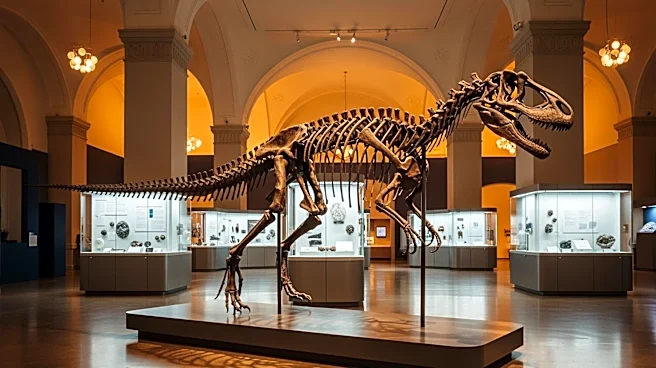
A near-complete Triceratops fossil, named 'Trey', recently sold for $5.55 million, highlighting a growing trend of dinosaur fossils fetching high prices in commercial sales. This trend has been accelerating as wealthy collectors seek to own pieces of prehistoric
history. In recent years, several fossils have sold for tens of millions of dollars, including a T. rex skeleton purchased for $31.8 million and a Stegosaurus for $44.6 million. The Society of Vertebrate Paleontology and other experts have expressed concerns about the commodification of these scientifically significant fossils, fearing that private ownership could limit access for research and public education. The sale of 'Trey' was organized by Joopiter, an online auction house, marking its first venture into dinosaur sales.
Why It's Important?
The sale of dinosaur fossils to private collectors poses a significant challenge to scientific research and public education. When fossils are sold to private individuals, they may become inaccessible to researchers who rely on these specimens to advance scientific knowledge. Public museums and academic institutions often cannot compete with the high prices paid by private collectors, which can lead to important fossils disappearing from public view. This trend raises ethical questions about the ownership and accessibility of cultural and scientific heritage. The high prices also reflect a strong public interest in dinosaurs, which could be leveraged to support scientific endeavors if managed appropriately.
What's Next?
The ongoing debate between private ownership and public access to dinosaur fossils is likely to continue. Researchers and institutions may push for legislation to protect scientifically valuable fossils, though such measures could face challenges in implementation. The fossil trade's impact on scientific research will depend on future sales and the willingness of private owners to loan or donate specimens to public institutions. The scientific community may also explore alternative funding models to secure important fossils for research and public display.
Beyond the Headlines
The sale of dinosaur fossils highlights broader issues of cultural heritage and the commercialization of scientific resources. The debate touches on ethical considerations about who should have access to these resources and how they should be used. The high prices paid for fossils also underscore the potential for these items to be seen as investment opportunities, which could further complicate efforts to ensure their availability for scientific study. The situation calls for a balanced approach that respects both the rights of private owners and the needs of the scientific community.