




What's Happening?
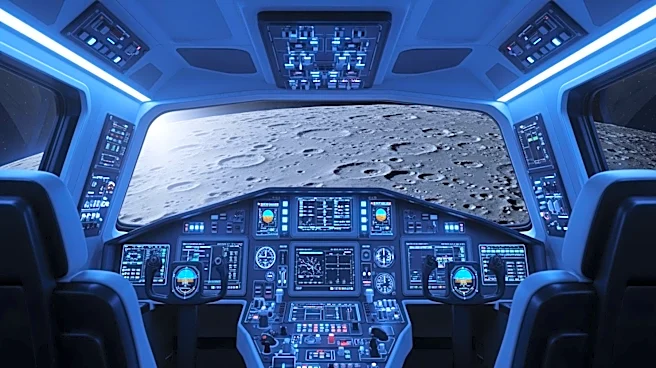
NASA's Artemis II mission is set to conduct significant scientific observations as the crew becomes the first humans to see the illuminated far side of the moon. The mission includes astronauts Reid Wiseman, Victor Glover, Christina Koch, and Canadian
Jeremy Hansen. During a six-hour window, the crew will observe various lunar features, including the Orientale basin and several craters. These observations aim to provide new insights into the moon's geological history and processes. The mission marks the first human lunar flyby since 1972, offering a unique opportunity to study the moon's surface from a new perspective.
Why It's Important?
The Artemis II mission is crucial for advancing lunar science and understanding the moon's geological history. The observations made by the crew could reveal new information about the moon's formation and evolution, contributing to broader scientific knowledge. The mission also demonstrates the capabilities of human spaceflight in conducting detailed scientific research, which is essential for future missions to the moon and beyond. The success of Artemis II will bolster international collaboration in space exploration, with Canada playing a significant role in the mission.
What's Next?
Following the observations, the Artemis II crew will continue their journey around the moon before returning to Earth. The data collected will be analyzed by scientists to enhance our understanding of the moon. The mission's findings will inform the planning of Artemis III, which aims to land astronauts on the lunar surface. NASA and its international partners will use the insights gained to refine technologies and strategies for future lunar exploration, including the establishment of a sustainable presence on the moon.