



What's Happening?
Lowell, Massachusetts, has launched a $300 million infrastructure program aimed at upgrading its 150-year-old sewer pipes. The initiative seeks to mitigate sewage backups into homes, reduce street flooding, and protect local rivers. A significant portion
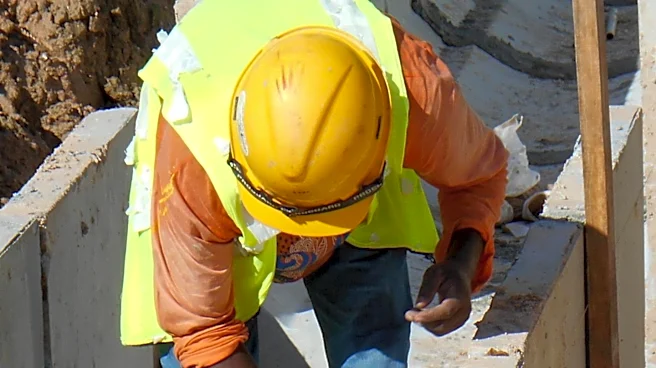
of Lowell's combined sewer pipes, which carry both stormwater and household wastewater, are over a century old and constitute 60% of the city's sewer infrastructure. Test-pit investigations are currently underway in the Lower Highlands neighborhood to gather data for new drainage pipelines. These investigations, conducted by Aqua Line Utility, involve digging trenches to assess underground materials and identify existing utilities. The program includes plans to enhance capacity at the Lowell Regional Wastewater Utility (Duck Island) and construct an overflow tank, alongside a $200 million sewer-separation project in Centralville and similar work in other neighborhoods.
Why It's Important?
This extensive infrastructure program is critical for public health and environmental protection in Lowell and surrounding communities. The current system, prone to overwhelming during intense rainfall, discharges approximately 430 million gallons of untreated sewage and stormwater annually into the Merrimack River, Concord River, and Beaver Brook. This poses a significant public health hazard, especially since about 700,000 residents rely on the Merrimack River for drinking water. The project's success will directly improve water quality, reduce the risk of waterborne diseases, and prevent property damage from sewage backups and flooding. It represents the largest and most expensive civil engineering effort in Lowell's modern history, highlighting the substantial investment required to address aging urban infrastructure across the U.S.
What's Next?
The preparatory work, including test-pit investigations in the Lower Highlands, is expected to conclude by mid-November. The overall program has staggered completion dates extending through 2032. Funding for this ambitious project is secured through federal and state grants, complemented by municipal bonds. As the sewer-separation projects progress in Centralville, The Acre, Back Central, and South Lowell neighborhoods, residents can anticipate significant improvements in wastewater management and environmental quality. The separated system will direct sewage to treatment plants and channel rainwater directly into local waterways, marking a substantial shift in the city's infrastructure capabilities.
Beyond the Headlines
The challenges faced by Lowell are indicative of a broader national issue concerning aging infrastructure in many U.S. cities. The reliance on federal and state grants, alongside municipal bonds, underscores the financial strain such large-scale projects place on local governments. This situation often sparks debates about infrastructure funding, long-term urban planning, and the balance between immediate community needs and future environmental sustainability. The project also highlights the interconnectedness of urban development, public health, and environmental stewardship, demonstrating how investments in one area can yield widespread benefits across multiple sectors. The successful execution of this program could serve as a model for other municipalities grappling with similar infrastructure deficits.